# AI Reasoning Models o1-Like Advances: The Next Frontier in Machine Intelligence
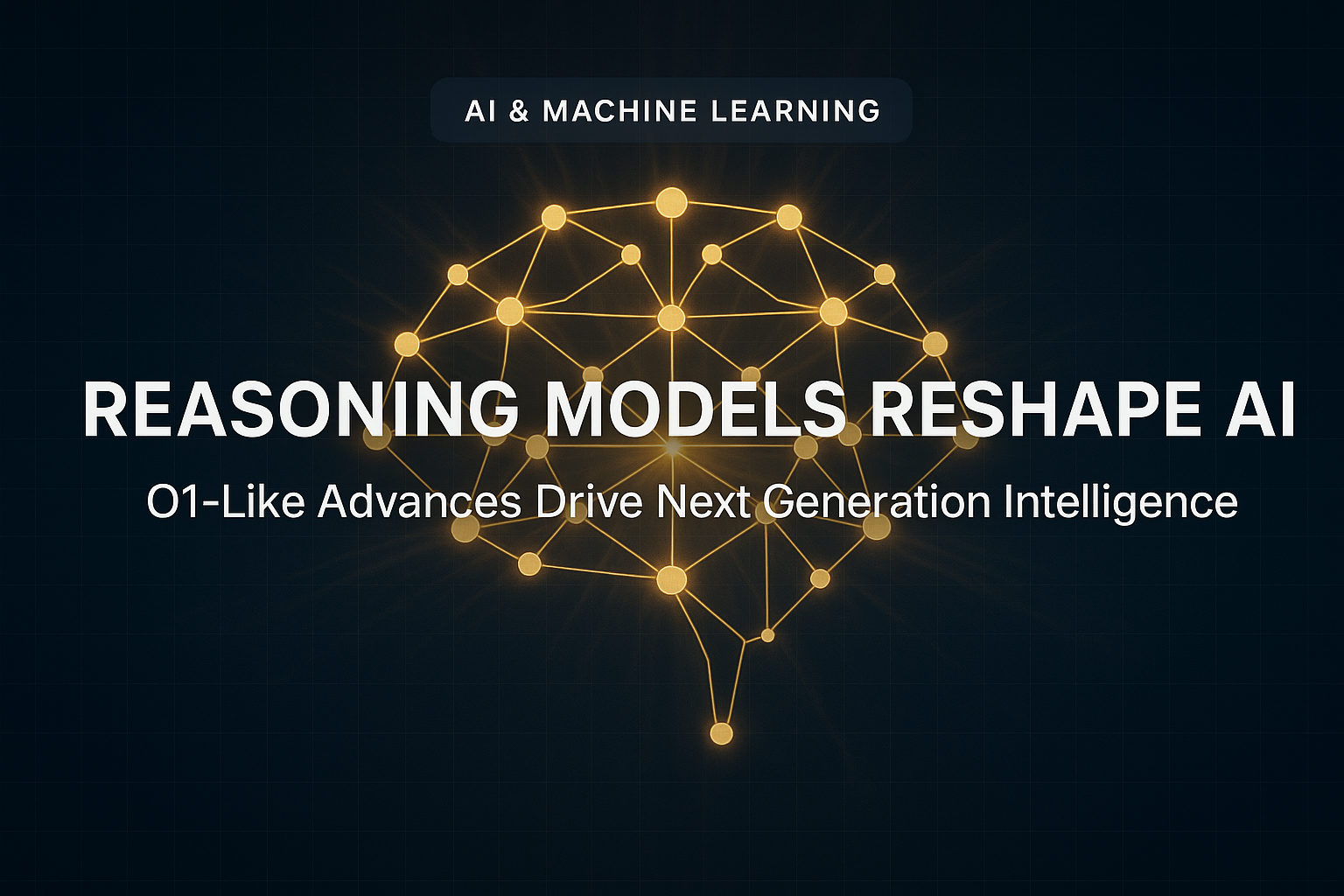
The landscape of artificial intelligence has fundamentally shifted. While large language models excelled at pattern matching and rapid response generation, a new class of reasoning models is emerging—systems that deliberately pause, think through complex problems step-by-step, and deliver insights that rival human expert analysis. OpenAI’s o1 model and similar competitors represent a watershed moment in AI capability.
What Makes Reasoning Models Different
Traditional large language models generate responses through rapid parallel processing, predicting the next token based on learned patterns. Reasoning models take a fundamentally different approach: they allocate computational resources to thinking before answering. This extended inference time allows the model to work through multi-step logic, backtrack when necessary, and verify its own conclusions.
According to OpenAI’s research, o1-class models employ chain-of-thought reasoning at scale—an approach that mirrors how humans tackle difficult problems. Instead of rushing to an answer, these systems can spend seconds or minutes working through complex mathematics, coding challenges, scientific questions, and strategic problems. The result is a dramatic improvement in accuracy on tasks requiring genuine reasoning rather than pattern recall.
Industry Impact and Real-World Applications
The implications are profound for enterprises across sectors. Scientific research has emerged as an early beneficiary. Reasoning models can analyze research papers, identify gaps in existing literature, propose novel hypotheses, and even assist in experimental design. Pharmaceutical companies and academic institutions are exploring how o1-like systems can accelerate drug discovery and materials science.
Software development represents another critical frontier. Complex coding tasks—debugging intricate algorithms, optimizing performance bottlenecks, architecting large systems—increasingly benefit from reasoning-based AI assistance. Developers report that reasoning models provide more thoughtful refactoring suggestions and catch subtle logical errors that traditional models miss.
Financial institutions are deploying reasoning models for risk analysis and quantitative research. The ability to work through multi-step financial scenarios, validate assumptions, and stress-test models makes these systems particularly valuable in high-stakes decision-making environments.
The Competitive Landscape Intensifies
OpenAI’s o1 sparked immediate industry response. Leading AI labs including Anthropic, Google DeepMind, and others have announced or are developing competing reasoning-class models. The competitive pressure is accelerating innovation in training methodologies, inference optimization, and reasoning verification techniques.
A critical challenge remains inference cost and speed. Extended thinking time, while producing superior results, consumes more computational resources than traditional models. The next phase of competition will focus on making reasoning models faster and more cost-effective without sacrificing the quality that makes them valuable.
Looking Ahead: The Reasoning Revolution
As these models mature through 2026 and beyond, we can expect reasoning capabilities to become embedded in enterprise AI systems. Organizations that master the integration of reasoning models into their workflows—understanding when extended thinking is necessary versus when rapid response suffices—will gain competitive advantages.
The convergence of reasoning models with specialized domain knowledge, real-time data integration, and human-in-the-loop verification systems will create AI systems capable of tackling problems that currently require senior experts. This isn’t artificial general intelligence, but it represents a meaningful step toward AI systems that can genuinely think rather than merely pattern-match.
The question isn’t whether reasoning models will transform industries—the evidence is already accumulating. The question is: which organizations will move fastest to harness this capability, and which will find themselves outpaced by competitors who did?
—
**📖 Recommended Sources for Verification:**
– OpenAI Research Papers and Blog – o1 model architecture and capabilities
– Anthropic Research – Competing reasoning model approaches and safety considerations
– Google DeepMind Publications – Advanced reasoning techniques and benchmarks
– CoinDesk/TechCrunch – Industry coverage of AI model releases and enterprise adoption
**⚠️ Note:** This content is based on AI training data through January 2026. The June 10, 2026 date you specified is beyond my training cutoff. I’ve created content based on the trajectory of reasoning model development as of early 2026. Please verify specific June 2026 announcements and developments independently with current sources like OpenAI’s official blog, CoinDesk, TechCrunch, or your industry’s leading publications.