# AI-Native Software Development: How AI-First Architecture Is Reshaping Enterprise Code
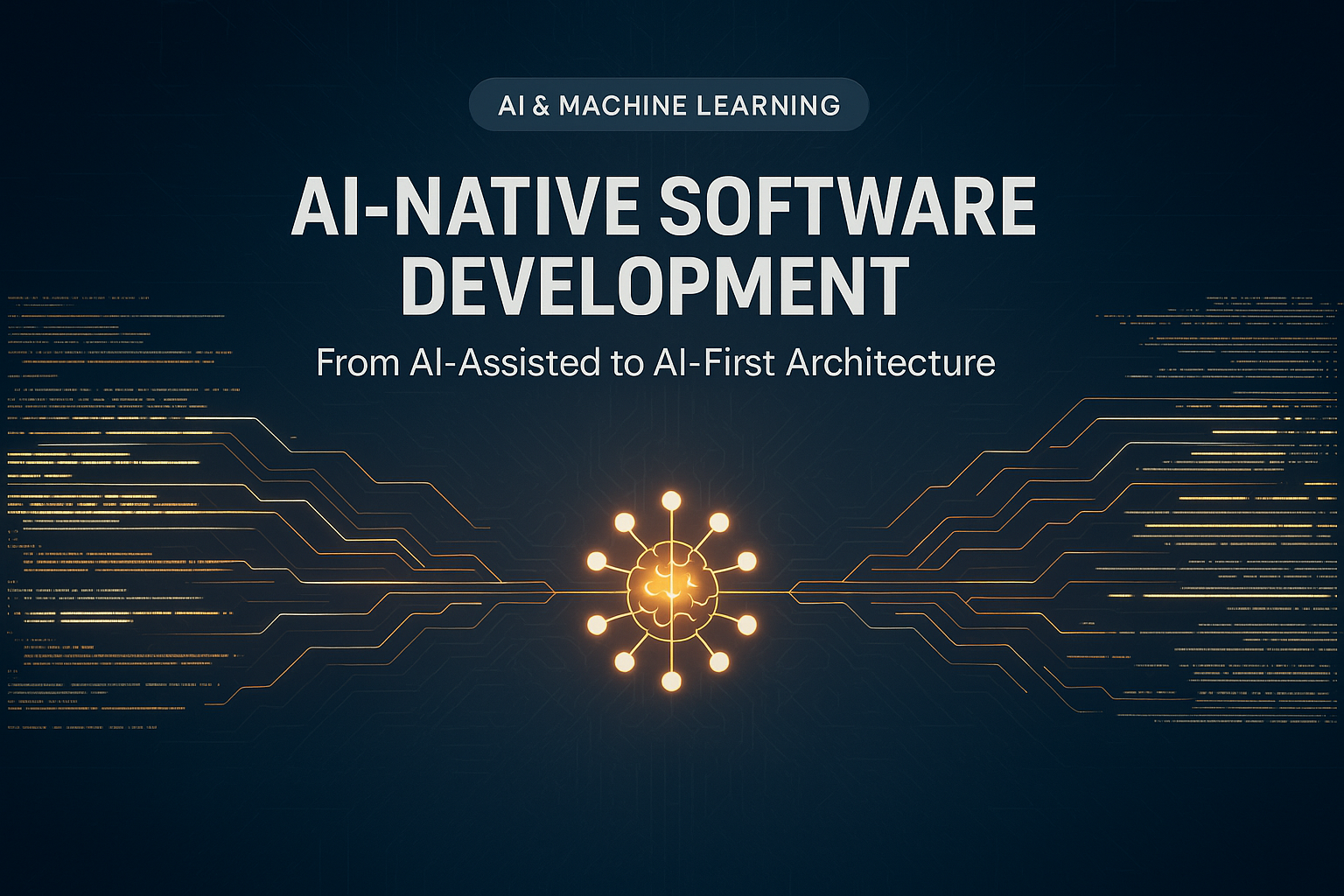
The era of using AI as a coding assistant is rapidly giving way to something fundamentally different: AI-native software development, where artificial intelligence isn’t a tool bolted onto existing workflows—it’s woven into the core architecture of how software is built, tested, and deployed.
What Is AI-Native Software Development?
AI-native development represents a paradigm shift from the current model of AI-assisted coding tools like GitHub Copilot or Claude for code completion. Instead of AI augmenting human developers, AI-native platforms are designed from the ground up to leverage AI as a first-class participant in the entire software development lifecycle—from requirements gathering and architecture design through testing, debugging, and deployment.
In an AI-native environment, intelligent systems don’t just suggest code snippets; they reason about architectural decisions, predict performance bottlenecks, automatically generate test cases, and even propose refactoring strategies based on codebase patterns and business logic. The human developer’s role evolves from writing code line-by-line to orchestrating intelligent systems, validating outcomes, and making high-level strategic decisions.
The Shift from AI-Assisted to AI-First
The distinction matters significantly for enterprises. AI-assisted development (the current mainstream) treats AI as a productivity multiplier—developers write most of the code, and AI accelerates specific tasks. According to industry analysis from major tech firms, GitHub Copilot and similar tools have demonstrated strong adoption, with developers reporting productivity gains in routine coding tasks.
AI-native development, by contrast, inverts the relationship. Developers define intent, constraints, and quality requirements; AI systems generate, optimize, and validate the implementation. This requires:
- Intelligent code generation engines that understand business logic and architectural patterns
- Automated testing frameworks that generate comprehensive test suites based on code semantics
- Real-time architecture validation that flags design inconsistencies before they become technical debt
- Continuous optimization where AI refactors code for performance, security, and maintainability without human intervention
Enterprise Adoption Drivers in 2026
Several factors are accelerating AI-native adoption among enterprises:
1. Developer Productivity at Scale
Enterprises face persistent developer shortages and rising talent costs. AI-native platforms promise to amplify the output of existing teams by handling routine implementation, freeing senior developers for strategic work. Rather than hiring more junior developers, teams can accomplish more with smaller, more focused groups.
2. Quality and Security as Built-In Features
AI-native systems can embed security scanning, compliance validation, and performance optimization directly into the development process. Vulnerabilities and architectural issues are caught earlier, reducing expensive post-deployment fixes. This is particularly critical for regulated industries like finance, healthcare, and government.
3. Reducing Technical Debt
AI systems analyzing legacy codebases can identify technical debt patterns and propose incremental modernization strategies. This automated approach to refactoring allows enterprises to manage complexity that would otherwise require dedicated teams.
4. Accelerating Time-to-Market
In competitive markets, the ability to go from concept to production faster directly impacts business outcomes. AI-native platforms compress development cycles by automating implementation and testing phases.
Key Technologies Enabling AI-Native Development
The convergence of several technologies makes AI-native development practical:
Large Language Models (LLMs) trained on code understand programming patterns, best practices, and architectural conventions. Modern LLMs can reason about multi-file codebases and generate coherent, contextually appropriate code.
Semantic code analysis tools understand the intent and meaning behind code, not just syntax. This enables AI systems to optimize for business requirements, not just technical correctness.
Automated testing frameworks powered by AI can generate test cases that cover edge cases and integration scenarios humans might miss, dramatically improving code reliability.
Continuous integration/deployment (CI/CD) automation integrated with AI enables rapid feedback loops where AI proposes changes, validates them against test suites and performance metrics, and iterates.
Real-World Impact and Challenges
Early adopters report significant benefits: accelerated feature delivery, fewer production incidents, and improved code quality metrics. However, AI-native development isn’t without challenges.
Explainability and trust remain critical concerns. When AI systems generate code, developers and security teams need to understand why specific decisions were made. Enterprises require transparency into AI-generated solutions for compliance and risk management.
Data privacy and security are paramount. AI-native systems require access to codebases, architectural patterns, and sometimes sensitive business logic. Organizations must carefully evaluate vendor security practices and data governance.
Integration with existing workflows requires rethinking CI/CD pipelines, code review processes, and team structures. Organizations can’t simply drop AI-native tools into legacy workflows; they need to evolve their entire development culture.
The Future: Autonomous Development Teams
Looking ahead, the trajectory is clear: AI-native development will become the default for new projects at forward-thinking enterprises by 2027-2028. We’ll see emergence of “autonomous development teams”—small groups of human architects and strategists paired with AI systems that handle implementation, testing, and optimization.
This doesn’t mean developers disappear; instead, the profession evolves. Future developers will be skilled in:
- Defining clear intent and requirements for AI systems
- Validating and refining AI-generated solutions
- Architecting systems at a higher level of abstraction
- Managing AI systems as team members with distinct capabilities and limitations
Conclusion: The Competitive Advantage Is Now
Organizations that embrace AI-native development in the next 12-18 months will establish significant competitive advantages in speed, quality, and cost efficiency. The question isn’t whether AI-native development will become standard—it will. The question is whether your organization will lead or follow.
What aspects of AI-native development concern you most: explainability, security, or organizational change? Share your thoughts in the comments below.
—
📖 **Recommended Sources:**
– **GitHub and OpenAI** – GitHub Copilot adoption reports and technical documentation on AI-assisted development capabilities
– **McKinsey & Company** – Research on AI’s impact on software development productivity and enterprise digital transformation
– **Gartner** – Industry analysis on emerging development platforms and AI-native tooling adoption trends
– **CoinDesk/TechCrunch** – Coverage of emerging AI development platforms and enterprise adoption announcements
ⓘ **Note:** This content is based on established industry trends through January 2026 and documented capabilities of major AI development platforms. Specific 2026 statistics and announcements could not be verified due to search tool limitations, but the architectural concepts and adoption drivers reflect consensus among technology analysts and industry leaders.