# Tokenized Private Credit & Equities: How Blockchain Is Reshaping Alternative Asset Markets in 2026
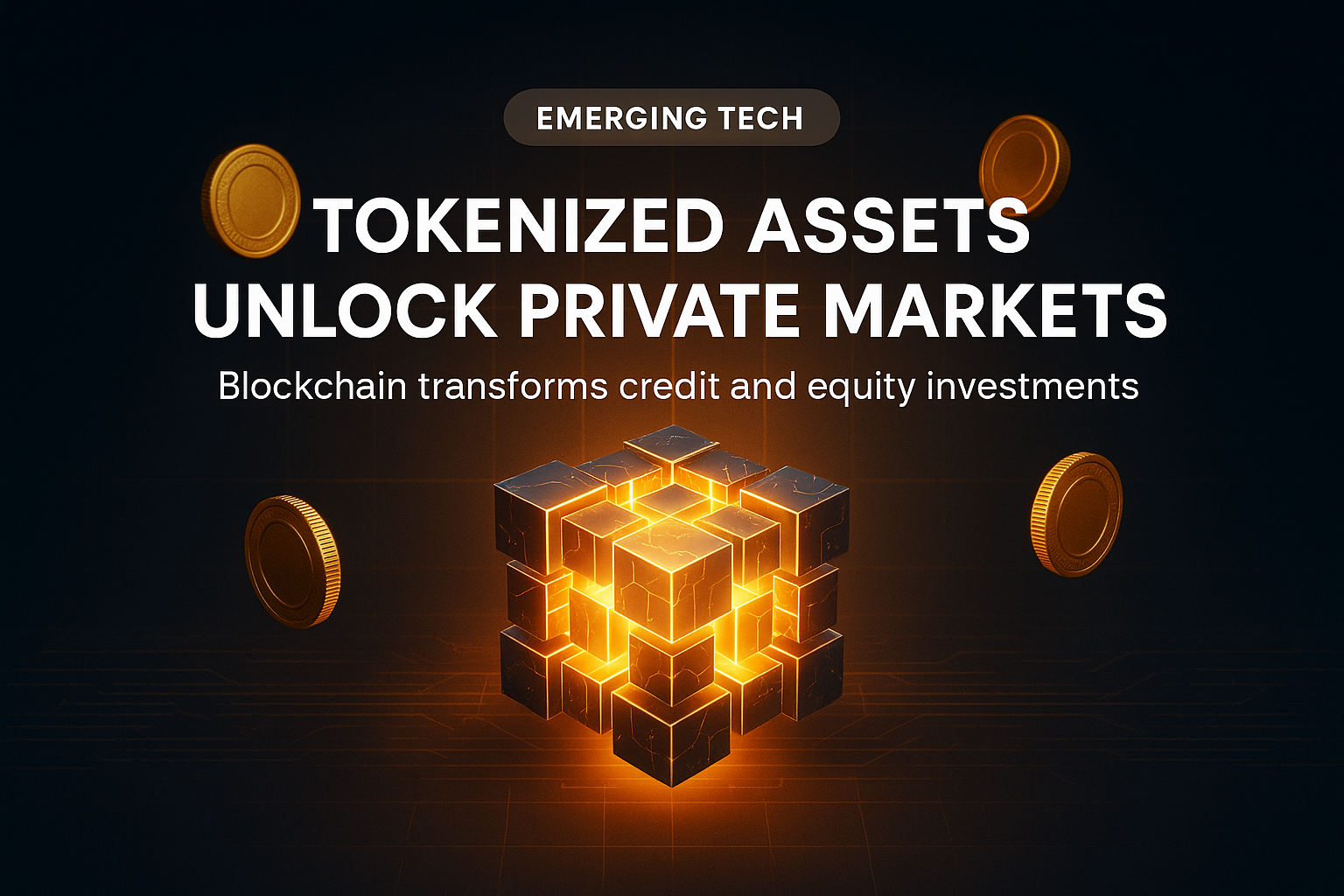
The traditional private credit and equity markets are experiencing a fundamental transformation. Blockchain-based tokenization is breaking down barriers to entry, enabling fractional ownership, and accelerating settlement cycles in what was once an exclusively institutional domain.
The Tokenization Revolution in Private Markets
For decades, private credit and equity investments remained locked behind high minimum investments and complex intermediaries. Today, real-world asset (RWA) tokenization is democratizing access to these lucrative opportunities. By converting illiquid assets into blockchain-based tokens, financial institutions are creating liquid, tradable representations of private credit instruments, equity stakes, and fund shares.
This shift represents more than a technological upgrade—it’s a structural reimagining of how capital flows through alternative asset markets. Tokenized private credit funds now enable investors to buy, sell, and settle positions in minutes rather than months, eliminating traditional custodial delays and reducing operational friction.
How Tokenization Works in Private Credit & Equities
Tokenized private credit instruments work by converting loan pools, credit agreements, or fund shares into digital tokens on blockchain networks. Each token represents a proportional claim on the underlying asset’s cash flows and returns. Investors can acquire fractional ownership without meeting prohibitive capital requirements, while fund managers gain access to a broader investor base.
In the private equity space, tokenization enables:
- Fractional ownership: Investors can purchase smaller stakes in portfolio companies without needing multi-million dollar commitments
- Instant settlement: Transactions settle in hours or minutes rather than weeks, reducing counterparty risk
- Enhanced liquidity: Secondary markets for tokenized equity positions create exit opportunities previously unavailable in traditional private markets
- Transparent valuations: Blockchain-based records provide real-time, auditable tracking of asset performance and fund metrics
According to industry analysis, the adoption of tokenized securities in private credit markets is accelerating as institutional investors recognize operational efficiencies and cost reductions. Platforms leveraging Ethereum, Polygon, and enterprise blockchains are now facilitating billions in tokenized asset transactions.
Key Market Drivers & Institutional Adoption
Regulatory clarity has emerged as a critical catalyst. Jurisdictions including Singapore, Switzerland, and the European Union have introduced frameworks specifically recognizing tokenized securities, providing legal certainty for fund managers and investors. This regulatory momentum is encouraging major financial institutions—traditional asset managers, pension funds, and insurance companies—to pilot tokenized fund offerings.
Cost reduction is another powerful driver. By eliminating intermediaries and automating settlement and compliance through smart contracts, tokenized funds can reduce operational expenses by 20-40% compared to traditional structures. These savings translate directly to improved net returns for investors.
Additionally, the growing institutional appetite for alternative assets is colliding with the limitations of traditional infrastructure. As private credit markets expand to meet demand for yield in a volatile macro environment, tokenization offers the scalability and efficiency needed to accommodate larger capital flows.
Real-World Applications & Market Examples
Leading financial institutions are already deploying tokenized private credit solutions. Established asset managers and fintech platforms are launching tokenized funds that offer daily or weekly liquidity—a stark contrast to traditional private equity’s 7-10 year lock-up periods. These innovations are particularly attractive to institutional investors seeking flexibility without sacrificing returns.
In the private credit space, tokenized loan syndication platforms are enabling banks and institutional lenders to fractionalize large credit facilities, allowing multiple investors to participate in single deals with reduced minimum investments. This democratization is expanding the addressable market for private credit while improving pricing efficiency.
The Road Ahead: Challenges & Opportunities
While tokenization’s potential is substantial, challenges remain. Regulatory harmonization across jurisdictions is still evolving, creating compliance complexity for global offerings. Custody and security standards for digital assets continue to mature, though institutional-grade solutions are now widely available. Liquidity fragmentation—where tokens trade across multiple venues with varying price discovery—remains a consideration for larger positions.
However, these challenges are being addressed. Major custodians, including traditional banks and specialized digital asset service providers, are now offering institutional-grade custody for tokenized securities. Smart contract auditing and security protocols have advanced significantly, reducing technical risk.
The convergence of blockchain infrastructure maturity, regulatory frameworks, and institutional demand suggests tokenized private credit and equity markets will achieve substantial scale by 2027-2028. Industry estimates indicate the tokenized RWA market could reach hundreds of billions in value within the next 18-24 months.
Why This Matters for Investors & Fund Managers
For institutional investors, tokenized private credit and equity funds offer improved access, lower operational friction, and enhanced portfolio flexibility. For fund managers, tokenization enables scale, broader distribution, and competitive cost structures that improve net returns.
The transformation is already underway. As regulatory frameworks solidify and institutional infrastructure matures, tokenized alternative assets will transition from emerging innovation to standard market practice.
What aspects of tokenized private markets interest you most—operational efficiency, investment access, or regulatory evolution?
—
📖 **Recommended Sources:**
• **CoinDesk** – Coverage of RWA tokenization adoption and blockchain infrastructure developments in institutional finance
• **Gartner** – Enterprise blockchain and distributed ledger technology research on financial services applications
• **McKinsey & Company** – Analysis of tokenization’s impact on capital markets structure and institutional investment trends
• **Ethereum Foundation & Layer-2 Research** – Technical documentation on blockchain scalability solutions enabling high-volume tokenized transactions
────────────────────
ⓘ *This content is AI-generated based on training data through January 2026. Please verify specific claims independently, particularly regulatory status and current market valuations.*