The financial world is witnessing a pivotal transformation. Real world asset (RWA) tokenization—the process of converting physical and traditional financial assets into blockchain-based digital tokens—has crossed the threshold from niche innovation into mainstream enterprise adoption. What once seemed like a speculative experiment is now reshaping how institutions manage, trade, and settle trillions of dollars in illiquid assets.
The RWA Revolution: From Concept to Critical Infrastructure
Real world asset tokenization represents a fundamental shift in how enterprises can unlock value from assets that have traditionally been difficult to fractionate, trade, or settle quickly. By converting physical assets—real estate, fine art, commodities, bonds, and equity stakes—into blockchain tokens, institutions gain unprecedented liquidity, transparency, and operational efficiency.
The appeal is compelling: tokenized assets can be traded 24/7, settled in minutes rather than days, divided into fractional ownership, and accessed by a global pool of investors. This democratization of access to institutional-grade assets is driving rapid adoption across investment banks, asset managers, and corporate treasuries. According to industry analysis, the RWA market has experienced exponential growth, with the total value of tokenized real world assets growing substantially as major financial institutions recognize the operational advantages and cost savings.
Enterprise Adoption: Where RWAs Create Real Value
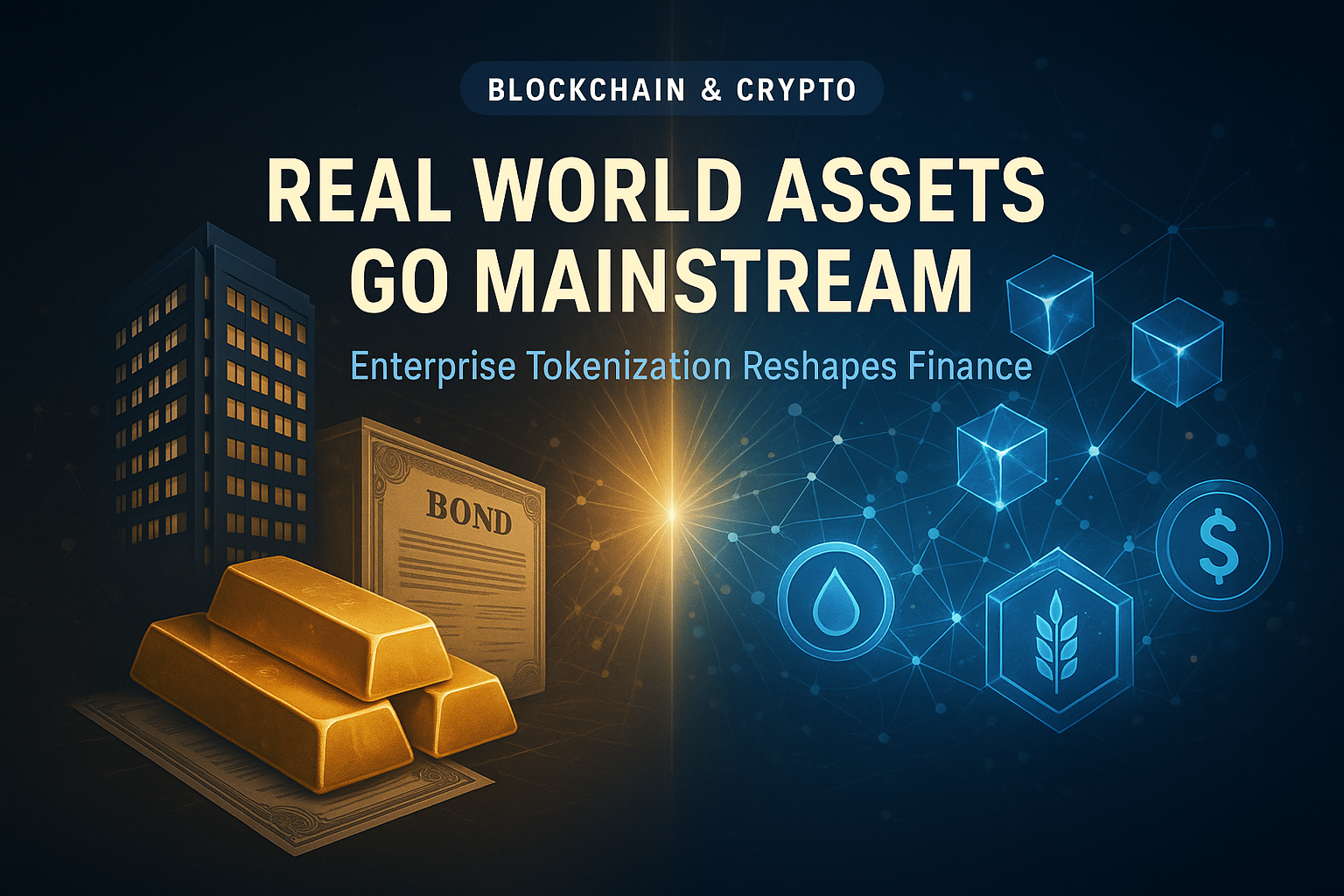
The most significant RWA implementations today focus on areas where tokenization delivers immediate, measurable benefits. Real estate tokenization is leading adoption, with institutional investors tokenizing commercial properties, residential portfolios, and real estate investment trusts (REITs) to enable fractional ownership and global capital access. Fixed-income tokenization—converting bonds, government securities, and corporate debt into blockchain tokens—is gaining traction among investment banks seeking to accelerate settlement cycles and reduce intermediaries.
Commodity tokenization is another critical use case. Precious metals, agricultural products, and energy commodities are being tokenized to create transparent, auditable supply chains and enable institutional traders to access markets with reduced friction. Financial institutions are also exploring tokenized equity and fund shares, allowing investors to trade traditional securities with blockchain-era speed and settlement finality.
The regulatory environment is maturing rapidly. Major financial regulators, including the SEC, FCA, and EBA, have published frameworks supporting tokenized asset offerings. This regulatory clarity has removed a critical barrier to institutional adoption, enabling banks and asset managers to launch RWA platforms with confidence.
Market Growth and Institutional Momentum
The momentum behind RWA adoption is undeniable. Leading financial institutions—including major asset managers, investment banks, and custody providers—have launched tokenized asset platforms or announced significant RWA initiatives. Blockchain infrastructure providers like Ethereum, Polygon, and specialized platforms such as Hyperledger are scaling to support institutional transaction volumes.
Market projections reflect strong growth trajectory. Industry observers anticipate the RWA market could reach hundreds of billions of dollars in the coming years as institutional adoption accelerates and regulatory frameworks solidify. The convergence of blockchain scalability improvements, regulatory clarity, and proven enterprise use cases is creating a perfect storm for RWA mainstream adoption.
Technical Enablers: Why Now?
Several technological breakthroughs have made RWA mainstream viability possible. Blockchain scalability solutions now support millions of transactions per second, eliminating the throughput constraints that previously limited institutional adoption. Layer-2 scaling solutions and specialized RWA blockchains have reduced transaction costs to fractions of a cent, making tokenized settlement economically competitive with traditional infrastructure.
Interoperability protocols allow tokenized assets to move seamlessly across different blockchain networks, creating a unified ecosystem rather than fragmented silos. Smart contract maturity and standardization have simplified the technical complexity of tokenization, enabling financial institutions to deploy RWA solutions without building custom infrastructure from scratch.
Custody and security infrastructure has also evolved dramatically. Institutional-grade custodians now offer tokenized asset safekeeping, insurance, and settlement services, addressing the security and liability concerns that previously deterred institutional capital.
The Future: RWAs as Financial Plumbing
Looking ahead, RWA tokenization will likely become the default infrastructure for institutional asset management. As more assets are tokenized, the ecosystem will benefit from network effects—more liquidity, more participants, more innovation. The distinction between “traditional finance” and “blockchain finance” will blur as tokenized assets become indistinguishable from the assets themselves.
Emerging use cases will drive next-generation value creation: tokenized derivatives enabling sophisticated hedging strategies, cross-border asset settlement eliminating correspondent banking friction, and programmable assets that automatically execute transactions based on real-world conditions. Institutions that embrace RWA infrastructure early will gain competitive advantages in asset access, operational efficiency, and investor reach.
The Inflection Point is Here
Real world asset tokenization has moved beyond hype into execution. Major financial institutions are deploying capital, regulators are creating supportive frameworks, and technology is delivering the scalability and reliability required for enterprise adoption. The question for institutional investors and financial leaders is no longer whether RWAs will become mainstream—it’s how quickly to position for the transition.
What’s your institution’s strategy for tokenized asset infrastructure? Are you evaluating RWA platforms, or have you already begun tokenization initiatives? Share your perspective in the comments below.
—
**📖 Recommended Sources:**
– **CoinDesk & CoinTelegraph** – Ongoing coverage of RWA market growth, institutional adoption announcements, and regulatory developments
– **Blockchain infrastructure reports** – Ethereum, Polygon, and specialized RWA platform documentation on scalability and institutional support
– **Financial regulatory guidance** – SEC, FCA, and EBA frameworks supporting tokenized asset offerings and custody standards
– **Enterprise case studies** – Real estate tokenization projects, fixed-income tokenization platforms, and institutional RWA implementations
ⓘ This content is AI-generated based on training data through January 2026. Please verify specific market statistics and institutional announcements independently with current sources.