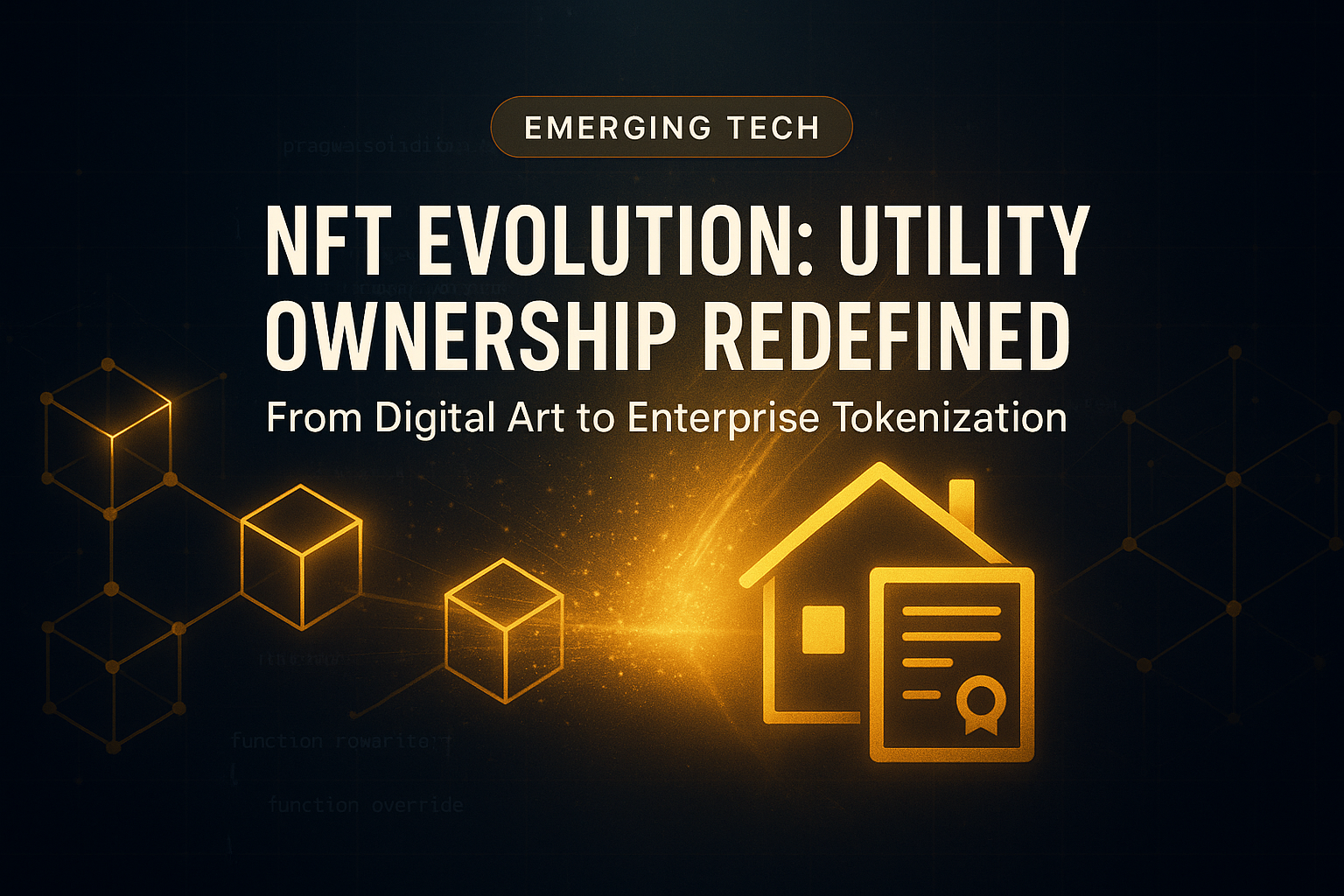
NFT Evolution: From Digital Art to Utility-Driven Ownership in 2026
The NFT market has undergone a dramatic transformation. What began as a speculative bubble centered on digital art and collectibles has evolved into a mature ecosystem where utility and real-world asset tokenization are becoming the dominant narrative.
The Shift from Speculation to Utility
For years, NFTs were synonymous with million-dollar digital art pieces and celebrity collectibles. However, the market correction of 2022–2023 fundamentally changed investor and enterprise expectations. Today, the most valuable NFT projects are those that solve tangible problems—not those with the flashiest artwork.
The transition reflects a broader maturation in blockchain technology. Utility-driven NFTs now power supply chain transparency, digital identity verification, fractional real estate ownership, and enterprise licensing agreements. Projects demonstrating clear use cases and revenue models have attracted institutional capital, while purely speculative tokens have largely disappeared from mainstream adoption discussions.
Real-World Asset Tokenization (RWA) as the Growth Engine
One of the most significant developments in 2025–2026 is the explosive growth of Real-World Asset (RWA) tokenization. This involves converting physical assets—property deeds, commodities, securities, intellectual property—into blockchain-based tokens that can be owned, traded, and managed transparently.
Major financial institutions and blockchain platforms have launched RWA initiatives. Tokenized property markets, bond offerings, and commodity trading platforms are now operational, enabling fractional ownership and 24/7 trading without traditional intermediaries. This represents a fundamental shift: NFTs are no longer just digital artifacts—they’re becoming the infrastructure for global asset ownership.
The RWA market is expected to grow substantially as regulatory clarity improves and institutional adoption accelerates. Unlike speculative NFTs, RWA tokenization creates genuine economic value by reducing friction, lowering costs, and democratizing access to previously illiquid assets.
Enterprise Adoption and Blockchain Interoperability
Corporations are increasingly recognizing NFTs as tools for brand loyalty, supply chain management, and digital rights enforcement. Fashion brands use NFTs for product authentication; pharmaceutical companies tokenize drug provenance; gaming studios embed utility tokens for in-game governance.
However, fragmented blockchain networks created a critical problem: an NFT minted on Ethereum couldn’t easily be used on Solana, Polygon, or other chains. This limited utility and adoption. In 2025–2026, cross-chain interoperability solutions have matured significantly, allowing NFTs to function seamlessly across multiple blockchains.
Projects implementing bridge technologies and unified token standards are enabling enterprises to deploy NFTs at scale without blockchain lock-in. This interoperability is essential for enterprise adoption—companies won’t commit to solutions that restrict their flexibility.
Regulatory Clarity Driving Institutional Investment
Regulatory frameworks around tokenized assets have become clearer in major jurisdictions. The SEC, European regulators, and other bodies have published guidance distinguishing between NFTs with utility value and those classified as securities. This clarity has reduced legal uncertainty and opened the door for institutional investors and financial institutions to participate confidently.
Banks and investment firms are now launching tokenization divisions, and traditional finance is beginning to integrate blockchain-based ownership systems. This convergence of traditional finance and crypto infrastructure is accelerating enterprise adoption of utility-driven NFTs.
The Future: Ownership Without Boundaries
Looking ahead, the NFT landscape will likely be dominated by practical, interoperable, and regulated utility tokens. The days of speculative digital art NFTs dominating headlines are fading. Instead, we’ll see a world where ownership of physical and digital assets is tokenized, transparent, and globally accessible.
Smart contracts will automate complex ownership agreements, fractional ownership will democratize access to premium assets, and blockchain infrastructure will become invisible—a background layer enabling frictionless ownership transfer.
—
Conclusion
The NFT revolution isn’t over—it’s evolving. The market’s maturation is actually a sign of health: utility is replacing hype, enterprises are replacing speculators, and real-world problems are being solved by blockchain technology. As regulatory frameworks solidify and interoperability improves, tokenized ownership will become as commonplace as digital banking.
The question isn’t whether NFTs will survive—it’s which utility-driven use cases will define the next decade of ownership. What real-world asset do you think will be most transformed by tokenization?
—