# How AI and Biotechnology Are Converging to Transform Drug Discovery in 2026
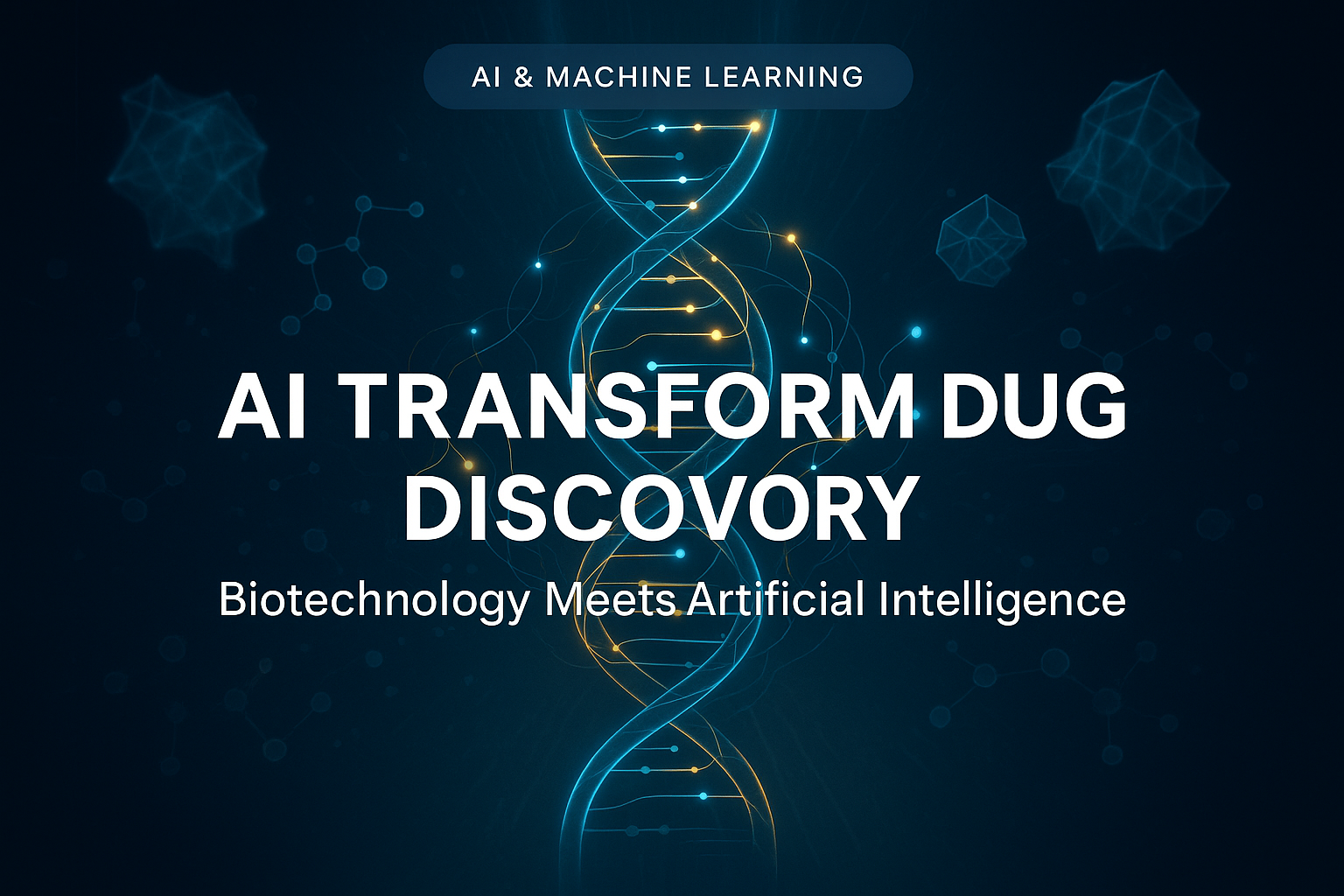
What if drugs that once took 10+ years to develop could be designed in months? The convergence of artificial intelligence and biotechnology is making this a reality, fundamentally transforming how pharmaceutical companies approach drug discovery and development.
The AI-Biotech Convergence: A Turning Point
The intersection of AI and biotechnology represents one of the most significant technological shifts in healthcare. According to recent industry conferences including Bio-IT World Expo 2026, the pharmaceutical industry is rapidly integrating AI-driven efficiency into core drug discovery workflows. This convergence isn’t just about faster processes—it’s about reimagining the entire foundation of how we develop life-saving treatments.
Machine learning algorithms are now seamlessly integrating data, computational power, and biological insights to accelerate discovery timelines. Companies are moving beyond traditional trial-and-error methodologies toward data-driven, predictive approaches that reduce both development time and costs.
Protein Folding: From Theory to Breakthrough Clinical Applications
One of the most transformative innovations emerging from this convergence is AI-driven protein structure prediction. Google DeepMind’s AlphaFold system demonstrated that artificial intelligence could predict a protein’s 3D structure from its amino acid sequence with remarkable accuracy—a breakthrough that earned international recognition.
The practical implications are enormous. According to research presented at Bio-IT World Expo 2026, advances in protein prediction enable the accurate determination of 3D protein conformations directly from amino acid sequences. This capability significantly accelerates the identification of drug targets and the design of therapeutic proteins.
Companies like Biohub are pushing this further with systems like ESM Fold 2, which doesn’t just predict protein structures—it designs and validates protein binders in a fraction of traditional timelines. What once required years of laboratory work can now be accomplished in days, fundamentally changing the economics of drug development.
Machine Learning in Personalized and Genomic Medicine
Beyond protein design, AI is revolutionizing how we approach personalized medicine. In genomic medicine, machine learning algorithms address the critical challenge of interpreting vast genetic datasets by automatically prioritizing pathogenic variants and improving diagnostic accuracy.
The 2026 biotech landscape shows strong momentum in several areas:
- Single-cell and multimodal foundation models enabling deeper understanding of cellular biology
- AI-enabled peptide design for therapeutic applications
- Automation-backed transformers driving high-throughput analysis
- CRISPR therapies integrated with AI diagnostics for precision treatment planning
- Liquid biopsies enhanced by machine learning for early disease detection
These advances represent a shift toward precision care—treatments tailored to individual patient genetics, disease progression, and drug response profiles. Machine learning excels at identifying patterns in complex genomic data that would be impossible for humans to detect manually.
Industry Adoption and Real-World Impact
The pharmaceutical and biotech sectors are moving beyond pilot projects. Major industry events like Discovery on Target (DOT) 2026 highlight the latest advances in AI-enabled drug target identification. Companies are increasingly deploying machine learning not as a research curiosity, but as a core operational capability.
This adoption is driving measurable improvements:
- Reduced development timelines through predictive modeling
- Lower failure rates in clinical trials via better target selection
- Cost reduction across the drug development pipeline
- Faster personalized medicine deployment using genomic analysis
The convergence is also creating new business models. Specialized AI biotech firms are partnering with traditional pharmaceutical companies, accelerating the pace of innovation across the industry.
The Road Ahead: What’s Next for AI-Biotech Integration
Looking forward, the convergence of AI and biotechnology will likely deepen across multiple dimensions. Foundation models trained on biological data will become increasingly sophisticated. Multimodal AI systems that integrate genomics, proteomics, imaging, and clinical data will enable holistic understanding of disease mechanisms.
The next frontier involves moving these AI-designed therapeutics into clinical practice at scale. While protein prediction has proven itself, the challenge now is translating these innovations into approved drugs that reach patients. This requires continued collaboration between AI researchers, biologists, and regulatory bodies.
Conclusion: A New Era in Drug Development
The convergence of artificial intelligence and biotechnology isn’t a distant future—it’s reshaping the industry right now. From protein folding predictions accelerating target identification to machine learning enabling personalized medicine, AI is fundamentally changing how we discover and develop treatments. For investors, healthcare professionals, and biotech leaders, understanding this convergence is critical to staying ahead in 2026 and beyond.
What aspects of AI-biotech convergence are most relevant to your organization—accelerated drug discovery, personalized medicine, or something else entirely? Share your thoughts in the comments below.
—
📖 **Recommended Sources:**
• **Bio-IT World Expo 2026** – Leading conference featuring advances in single-cell models, AI-enabled peptide design, and AI-driven drug discovery efficiency
• **Discovery on Target (DOT) 2026** – Premier industry conference dedicated to drug targets and AI-enabled discovery platforms
• **Google DeepMind AlphaFold** – Foundational protein structure prediction research demonstrating AI’s clinical potential in biotechnology
• **Biohub ESM Fold 2** – Real-world example of AI protein design and validation in accelerated timelines
• **Genomic Medicine Research** – Studies on machine learning applications in variant interpretation and personalized medicine
ⓘ This content is AI-generated based on research through June 2026. Please verify specific claims and statistics independently with primary sources.