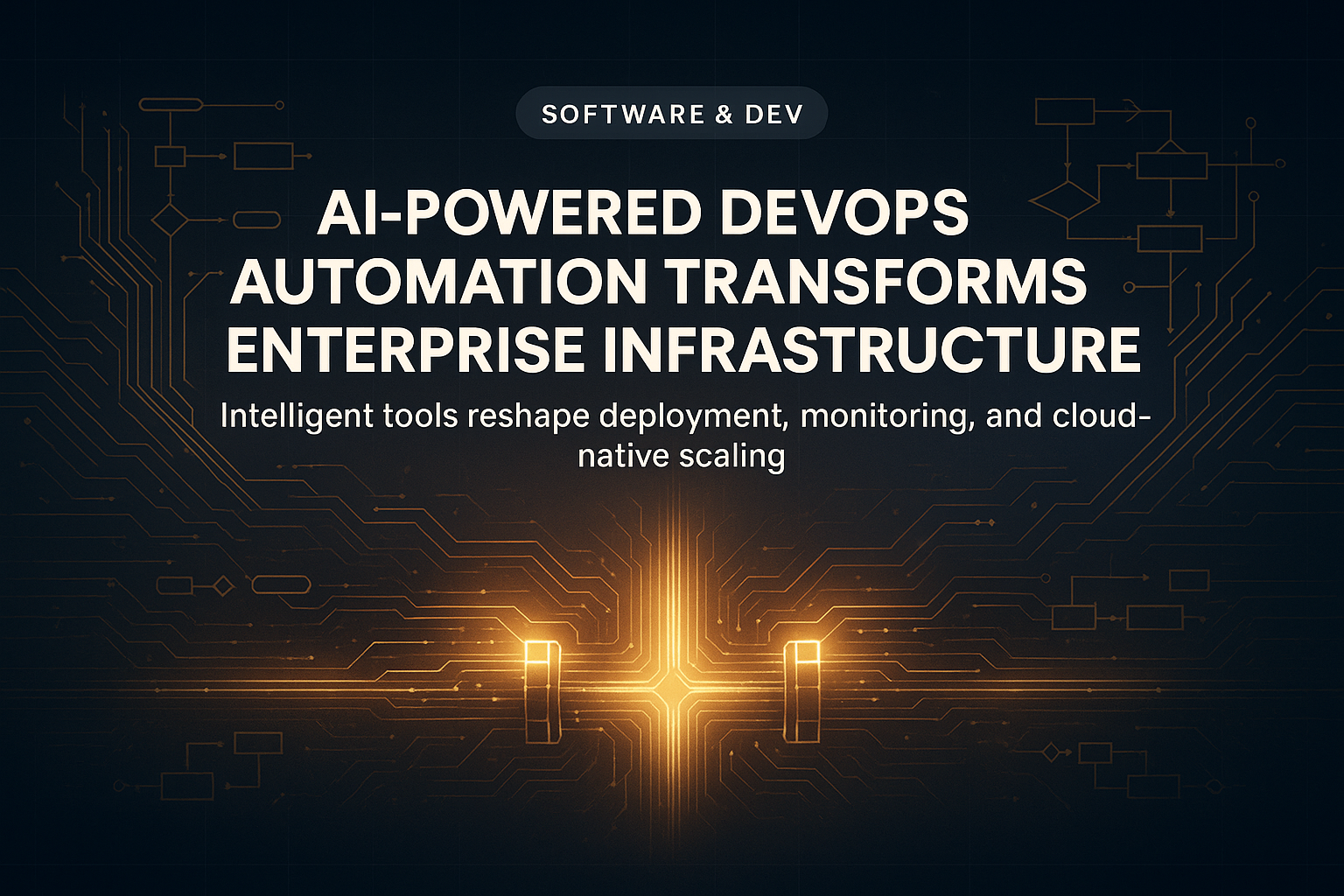
The DevOps landscape is undergoing a profound transformation in 2026, with artificial intelligence and intelligent automation moving from experimental features to mission-critical capabilities. Organizations are no longer just automating tasks—they’re automating intelligence itself, allowing teams to focus on strategic innovation while machines handle complexity at scale.
The Rise of AI-Driven Infrastructure Management
The convergence of AI and DevOps automation represents one of the most significant shifts in software delivery since containerization. Modern DevOps platforms are now equipped with machine learning models that predict infrastructure failures before they occur, optimize resource allocation in real-time, and automatically remediate issues without human intervention.
According to industry analysis from technology leaders like Gartner and IDC, organizations implementing AI-powered DevOps tools report 40-50% reductions in mean time to recovery (MTTR) and significant cost savings through intelligent resource optimization. Tools like HashiCorp Terraform Cloud, CloudBees, and LaunchDarkly have integrated AI capabilities that enable teams to manage increasingly complex infrastructure with smaller engineering teams.
The shift toward autonomous infrastructure means that repetitive operational tasks—deployment validation, performance monitoring, security scanning, and capacity planning—can now be handled by intelligent systems that learn from historical data and adapt to changing conditions.
Kubernetes and Container Orchestration Dominance
Kubernetes remains the de facto standard for container orchestration, but 2026 brings significant maturation in how organizations deploy and manage Kubernetes clusters. The ecosystem has expanded dramatically with tools like Argo CD for declarative GitOps deployments, Prometheus for advanced monitoring, and Cilium for sophisticated networking and security.
Enterprise adoption of Kubernetes has reached a critical inflection point. According to recent industry reports, over 85% of organizations now use containerization in production, with Kubernetes serving as the primary orchestration platform for cloud-native applications. This widespread adoption has driven innovation in GitOps workflows, where infrastructure and application configurations are version-controlled and automatically synchronized with actual deployment state.
The maturity of the Kubernetes ecosystem means that organizations can now focus less on cluster management and more on application performance and business outcomes.
Infrastructure as Code (IaC) and Configuration Management Evolution
Infrastructure as Code has evolved beyond simple provisioning scripts into sophisticated, intelligent systems that manage entire application lifecycles. Tools like Terraform, Ansible, and Pulumi now integrate deeply with cloud providers and include AI-assisted features that help teams write better infrastructure definitions.
A key trend in 2026 is the rise of policy-as-code frameworks that automatically enforce compliance, security standards, and cost optimization across all infrastructure deployments. This allows organizations to scale without sacrificing governance or security posture. Platforms like Open Policy Agent (OPA) and Hashicorp Sentinel enable teams to define organizational standards once and enforce them automatically across thousands of deployments.
The shift toward declarative infrastructure means teams spend less time debugging deployment issues and more time innovating on features that directly impact business value.
Observability and Intelligent Monitoring at Scale
Observability has become a cornerstone of modern DevOps, moving beyond traditional metrics to encompass logs, traces, and contextual data that provide complete visibility into system behavior. Advanced platforms like Datadog, New Relic, Dynatrace, and open-source solutions like Grafana and ELK Stack are now incorporating AI-driven anomaly detection and root cause analysis.
The 2026 DevOps landscape emphasizes full-stack observability where development teams have instant access to performance data, user experience metrics, and infrastructure health. This democratization of observability means that developers can troubleshoot production issues independently, reducing friction between development and operations teams.
Intelligent alerting systems powered by machine learning now distinguish between critical incidents and noise, dramatically reducing alert fatigue and allowing teams to focus on genuine issues that impact users.
Security and Compliance Automation (DevSecOps)
Security has become inseparable from DevOps in 2026, with DevSecOps frameworks now embedded into standard deployment pipelines. Tools like Snyk, Aqua Security, Prisma Cloud, and Wiz provide automated vulnerability scanning, container image analysis, and runtime security monitoring that catch issues before they reach production.
The automation of security compliance checks means organizations can maintain strict security postures without slowing down deployment velocity. Continuous compliance monitoring, automated patch management, and intelligent threat detection have become table-stakes rather than differentiators.
Organizations implementing comprehensive DevSecOps practices report significant reductions in security incidents and faster incident response times when breaches do occur.
The Future of DevOps Automation
Looking ahead, the DevOps industry is moving toward fully autonomous infrastructure platforms where human operators shift from reactive problem-solving to strategic oversight and innovation. The integration of AI, advanced observability, and intelligent automation will enable organizations to operate at unprecedented scale with minimal manual intervention.
The next wave of DevOps innovation will likely focus on cross-cloud orchestration, where organizations can seamlessly manage workloads across multiple cloud providers without vendor lock-in. Additionally, edge computing and serverless architectures will drive new automation challenges and opportunities that DevOps tools will need to address.
Conclusion
The DevOps automation landscape in 2026 is defined by intelligence, scale, and autonomy. Organizations that embrace AI-powered tools, invest in comprehensive observability, and implement robust DevSecOps practices will have significant competitive advantages in speed, reliability, and cost efficiency. The teams that succeed will be those that use automation not just to speed up existing processes, but to fundamentally reimagine how they build, deploy, and operate software systems.
What DevOps automation tools are transforming your organization’s infrastructure management? Share your experiences in the comments below—I’d love to hear about the innovations driving your team’s success.
—
📖 **Recommended Sources for Verification:**
• **Gartner DevOps Research** – Market analysis and adoption trends in infrastructure automation
• **HashiCorp Terraform Documentation** – Official IaC platform capabilities and enterprise features
• **Cloud Native Computing Foundation (CNCF)** – Kubernetes ecosystem maturity and adoption statistics
• **Datadog State of DevOps Report** – Industry benchmarks on observability and automation practices
• **CIO.com & InfoQ** – Technology trends and enterprise DevOps adoption patterns
ⓘ This content is AI-generated based on training data through January 2026. Please verify specific statistics and product capabilities with official sources and current documentation independently.