# AI Robotics Physical Convergence: When Intelligence Meets the Real World in 2026
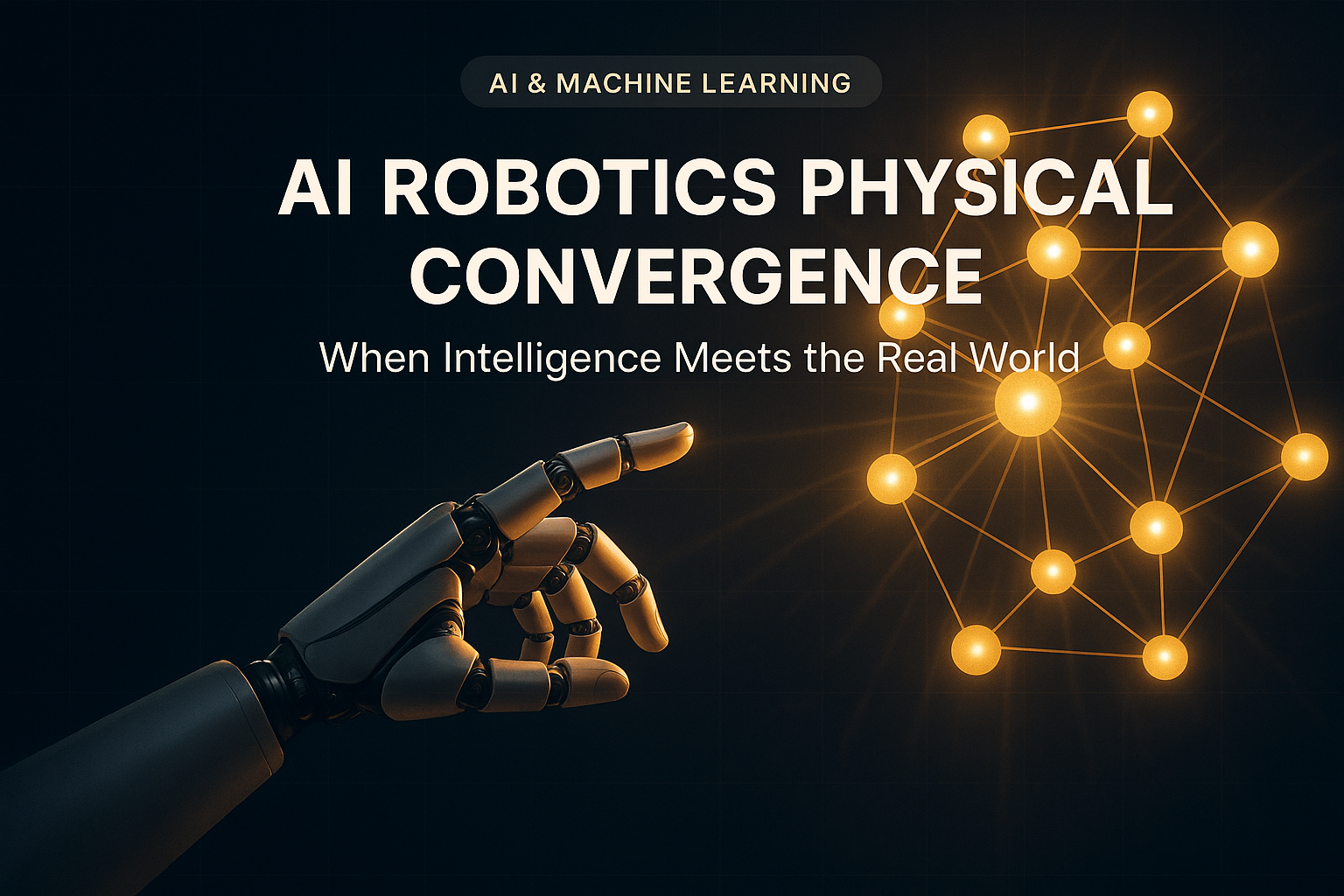
The line between digital intelligence and physical reality is blurring at an unprecedented pace. As we move deeper into 2026, the convergence of advanced AI systems and robotics is fundamentally transforming how machines perceive, learn, and act in the real world—creating what industry experts call embodied AI.
What Is Embodied AI and Why It Matters Now
Embodied AI represents a critical shift in how artificial intelligence operates. Rather than existing purely as software processing text or images in isolation, embodied AI systems integrate large language models (LLMs) with physical robotic platforms, enabling machines to learn from direct interaction with their environment. This means robots aren’t just following pre-programmed instructions—they’re reasoning about the world, adapting to novel situations, and solving problems in real-time.
The significance of this convergence cannot be overstated. For decades, robotics and AI developed along somewhat parallel paths. Today, they’re merging into a unified discipline where a robot’s physical capabilities are amplified by state-of-the-art language models and vision systems. Companies like Tesla, Boston Dynamics, and Figure AI are pioneering this integration, moving humanoid robots from research labs into real-world deployment scenarios.
The Role of Large Language Models in Physical Systems
The breakthrough enabling this convergence is the integration of large language models with robotic platforms. LLMs like GPT-4 and specialized models trained on robotics data are now powering robot decision-making in ways that were impossible just years ago.
Consider the practical implications: A humanoid robot encountering an object it’s never seen before can now reason about its properties, predict how to interact with it, and adjust its approach based on feedback—all in real-time. This represents a fundamental departure from traditional robotic programming, where every action had to be explicitly coded.
According to industry analysis, this integration is accelerating task learning and reducing the time required to deploy robots in new environments. Robots can now learn from human demonstrations, natural language instructions, and direct interaction with their surroundings. This flexibility is crucial for deployment in dynamic, unpredictable real-world settings like warehouses, manufacturing facilities, and eventually, household environments.
Leading Players Shaping the Convergence
The race to achieve practical embodied AI is intensifying among major technology companies and specialized robotics firms. Tesla’s Optimus program represents one of the most visible efforts, with the company integrating its AI expertise into humanoid robots designed for manufacturing and eventually consumer applications. Tesla has emphasized that Optimus represents a long-term strategic asset, potentially becoming as significant as their vehicle business.
Figure AI has demonstrated impressive progress in bipedal locomotion and manipulation, with robots capable of learning complex tasks through observation and interaction. Their approach emphasizes safety and real-world applicability from the outset, rather than pure research demonstrations.
Boston Dynamics continues advancing the state-of-the-art in robot mobility and dexterity, with their platforms increasingly incorporating advanced AI reasoning capabilities. Their focus on real-world deployment—from warehouse automation to research partnerships—demonstrates how embodied AI is transitioning from laboratory curiosity to practical tool.
These companies are competing not just on hardware, but on whose AI integration is most effective, most generalizable, and most capable of handling novel situations without constant human intervention.
Real-World Applications Emerging Now
The convergence of AI and robotics is already yielding tangible applications across multiple sectors. In manufacturing, robots equipped with advanced vision and reasoning systems can adapt to supply chain disruptions, adjust to new product designs, and collaborate more naturally with human workers.
Warehouse automation is another critical domain. Robots that can reason about spatial layouts, understand complex picking instructions, and optimize their own movements are dramatically improving logistics efficiency. The ability to handle irregular objects and adapt to dynamic environments—capabilities enabled by embodied AI—is transforming what’s possible in automated fulfillment.
Healthcare and research environments are also seeing early deployments. Robots capable of understanding natural language instructions and reasoning about complex procedures are beginning to augment human workers in surgical support, laboratory automation, and patient care contexts.
Challenges and the Path Forward
Despite remarkable progress, significant hurdles remain. Energy efficiency in humanoid robots is still a constraint for extended real-world operation. Safety and liability questions persist as robots become more autonomous and capable. Data requirements for training embodied AI systems remain substantial, and generalization—the ability to transfer learning from one context to another—is still an open research problem.
However, the trajectory is clear. As LLMs continue improving, as robotic hardware becomes more capable and affordable, and as real-world deployment data accumulates, the convergence will accelerate. We’re likely to see exponential improvements in robot capability over the next 12-24 months as companies iterate on deployed systems and learn from physical-world feedback.
The Future: A World of Intelligent Physical Agents
Looking ahead, the convergence of AI and robotics will likely reshape labor markets, manufacturing economics, and how we approach automation. The robots of 2026 are still primarily in specialized domains—factories, warehouses, research labs. But the trajectory points toward more generalist systems capable of handling diverse tasks with minimal retraining.
The integration of embodied AI with robotics isn’t just a technical milestone—it’s the beginning of a new era where intelligent physical agents become commonplace. The question is no longer whether AI will interact with the physical world, but how quickly, how safely, and to what extent we’ll integrate these systems into everyday environments.
What aspects of embodied AI concern you most—safety, job displacement, or something else entirely? The conversation about responsible deployment of intelligent robots is just beginning.
—
📖 **Recommended Sources:**
– **Tesla Investor Relations & AI Blog** – Official updates on Optimus development and AI integration strategies
– **Figure AI Research & Announcements** – Technical progress on bipedal humanoid robots and embodied AI capabilities
– **Boston Dynamics Publications** – Cutting-edge robotics research and real-world deployment case studies
– **Industry Analysis (Gartner, McKinsey)** – Broader trends in robotics adoption and AI convergence across sectors
ⓘ *This content is AI-generated based on training data through January 2026 and current industry developments. Please verify specific technical claims and company announcements independently with official sources.*