# AI in Drug Discovery: How Machine Learning is Accelerating Pharmaceutical Innovation in 2026
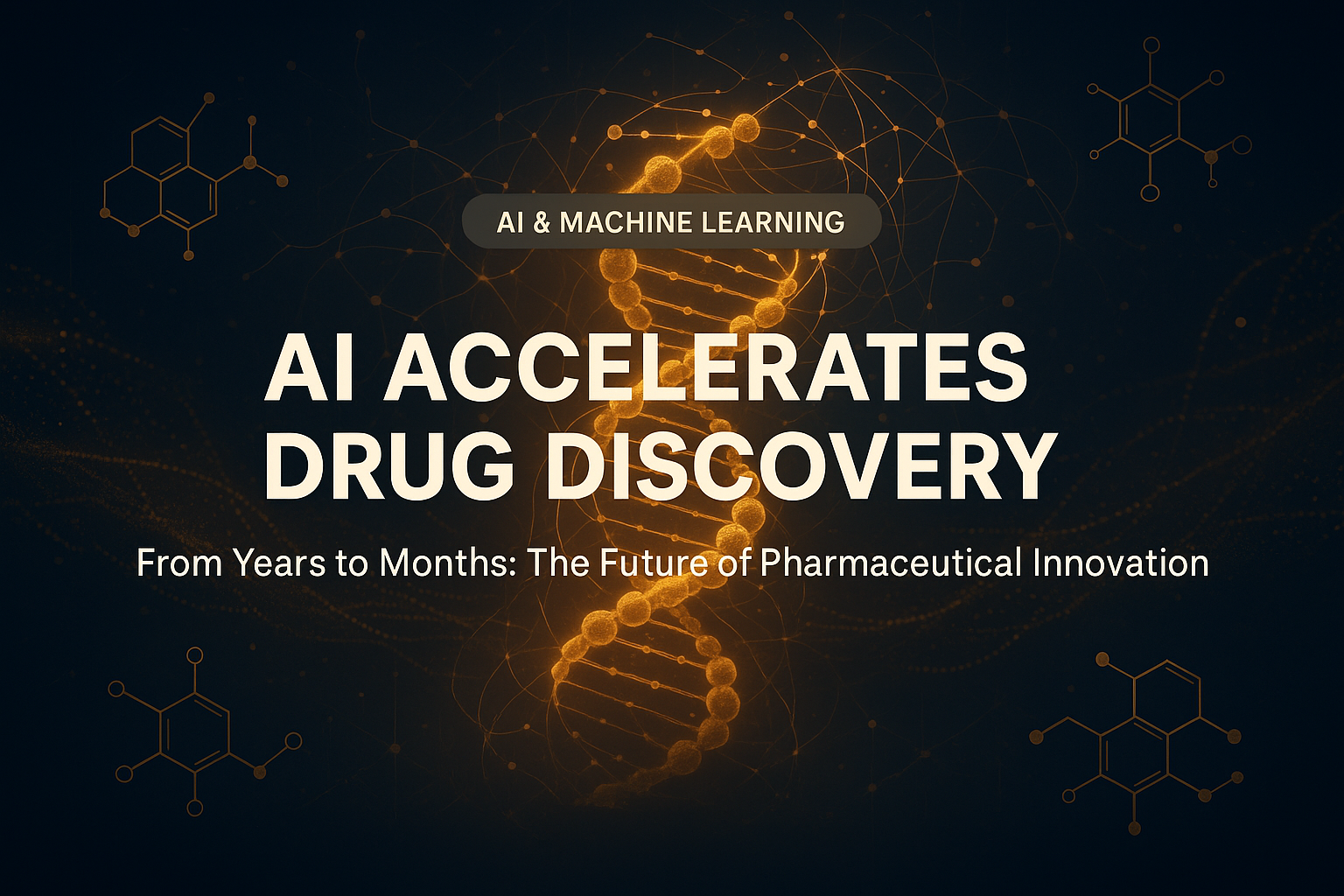
The pharmaceutical industry stands at an inflection point. What once took over a decade and billions of dollars to bring a single drug to market is now being compressed into months through the power of artificial intelligence and machine learning. This transformation isn’t theoretical—it’s happening right now, reshaping how scientists identify promising compounds, predict molecular behavior, and validate therapeutic targets.
The Traditional Drug Discovery Bottleneck
Historically, drug discovery has been a painstaking process. Researchers would screen millions of chemical compounds, test them in laboratory models, and hope a handful showed promise for further development. This brute-force approach was expensive, time-consuming, and often resulted in high failure rates even after years of investment. The average cost to bring a new drug to market exceeded $2.6 billion, with timelines stretching 10–15 years from initial discovery to regulatory approval.
The bottleneck wasn’t just cost—it was speed and predictability. Scientists lacked the computational tools to rapidly model how potential drugs would interact with disease targets at the molecular level. Every hypothesis required months of wet-lab experimentation to validate.
How AI is Transforming Molecular Discovery
Machine learning algorithms are now capable of analyzing vast datasets of molecular and genetic information to identify promising drug candidates in weeks rather than years. These systems learn from historical data about which molecular structures succeed or fail, then apply that knowledge to screen millions of potential compounds simultaneously.
According to research from leading biotech firms and academic institutions, AI-driven drug discovery platforms can reduce the time to identify a viable lead compound from 4–5 years to just 6–12 months. This acceleration stems from AI’s ability to:
- Predict molecular interactions with unprecedented accuracy
- Identify novel drug targets by analyzing genetic and proteomic data
- Optimize compound structures for safety and efficacy before synthesis
- Model patient populations to predict which treatments will work for specific groups
Companies like Exscientia, Atomwise, and BenevolentAI have already demonstrated proof-of-concept by identifying novel therapeutic candidates faster than traditional methods. These platforms combine deep learning with chemistry expertise to navigate the vast landscape of possible molecular designs.
AlphaFold and Protein Structure Prediction: A Game-Changer
One of the most significant breakthroughs in AI-assisted drug discovery is DeepMind’s AlphaFold, which solved the protein structure prediction problem—a challenge that had stumped scientists for 50 years. AlphaFold can predict how proteins fold into their 3D structures with remarkable accuracy, and this capability has profound implications for drug design.
Understanding protein structures is critical because drugs work by binding to specific proteins and modulating their function. With AlphaFold, researchers can now rapidly model how potential drug molecules will interact with disease-causing proteins, dramatically improving the odds of success before entering the laboratory.
The impact has been industry-wide. According to reports from biotech research organizations, access to AlphaFold’s protein structure database has accelerated research into previously “undruggable” targets—proteins that were once considered too difficult to target therapeutically. This opens doors to treating diseases that have lacked effective treatments for decades.
Generative AI and De Novo Drug Design
Beyond analyzing existing compounds, generative AI models are now capable of designing entirely new molecules from scratch. These systems learn the underlying rules of chemistry and molecular biology, then generate novel structures optimized for specific therapeutic properties.
Generative models can rapidly explore chemical space that humans would never think to investigate, discovering compounds with properties that would be nearly impossible to design manually. This capability is particularly powerful for:
- Rare and orphan diseases where the patient population is too small to justify traditional drug development
- Antimicrobial resistance where new antibiotics are urgently needed
- Personalized medicine where treatments can be tailored to individual patient genetics
The implications for pharmaceutical innovation are substantial. Instead of chemists spending months synthesizing and testing variations of a single lead compound, AI can generate thousands of optimized candidates for evaluation, dramatically expanding the search space and improving hit rates.
Accelerating Clinical Development and Patient Outcomes
The benefits of AI-driven discovery extend beyond the research phase. Machine learning models are increasingly being used to:
- Predict clinical trial outcomes before expensive Phase II and Phase III studies begin
- Identify patient populations most likely to benefit from a treatment
- Detect safety signals in real-world data to inform post-market surveillance
- Optimize dosing regimens based on individual patient characteristics
According to industry analyses, AI-assisted clinical development can reduce the time and cost of bringing drugs to patients by 20–40%. For patients waiting for treatments, this acceleration can literally be the difference between hope and despair.
The Competitive Landscape and Future Outlook
The race to integrate AI into drug discovery is intensifying. Major pharmaceutical companies including Merck, Pfizer, and GSK have established dedicated AI research units and partnered with specialized biotech firms. Venture capital investment in AI-driven drug discovery companies exceeded several billion dollars in recent years, signaling strong confidence in the sector’s potential.
Looking ahead, the convergence of large language models, protein structure prediction, and generative chemistry will likely accelerate further. We can expect:
- Autonomous drug discovery platforms that operate with minimal human intervention
- Multi-target drug design optimizing treatments for complex diseases
- Real-time adaptive trials that use AI to adjust patient cohorts and dosing on the fly
- Integration with genomic medicine enabling truly personalized therapeutics
The next frontier will be ensuring these powerful tools are deployed responsibly, with proper validation and regulatory oversight to maintain safety standards while capturing the speed benefits.
Conclusion: A New Era in Pharmaceutical Innovation
AI is not replacing pharmaceutical scientists—it’s augmenting their capabilities in ways that were unimaginable just five years ago. By automating the tedious aspects of molecular screening and prediction, AI frees researchers to focus on the creative and strategic dimensions of drug discovery. The result is a dramatic acceleration in bringing life-saving treatments to patients.
For biotech investors, pharmaceutical companies, and patients alike, the message is clear: the future of drug discovery is algorithmic. The question is no longer whether AI will transform this industry, but how quickly organizations can adapt to harness its potential. What breakthrough treatment do you think AI will help us discover next?
—
📖 **Recommended Sources:**
– **DeepMind AlphaFold Research** – Breakthrough in protein structure prediction enabling rapid drug target identification
– **Biotech Industry Reports** – Analysis of AI-driven drug discovery timelines and cost reduction metrics
– **Pharmaceutical Innovation Studies** – Case studies from companies like Exscientia and BenevolentAI demonstrating accelerated discovery timelines
ⓘ *This content is AI-generated based on training