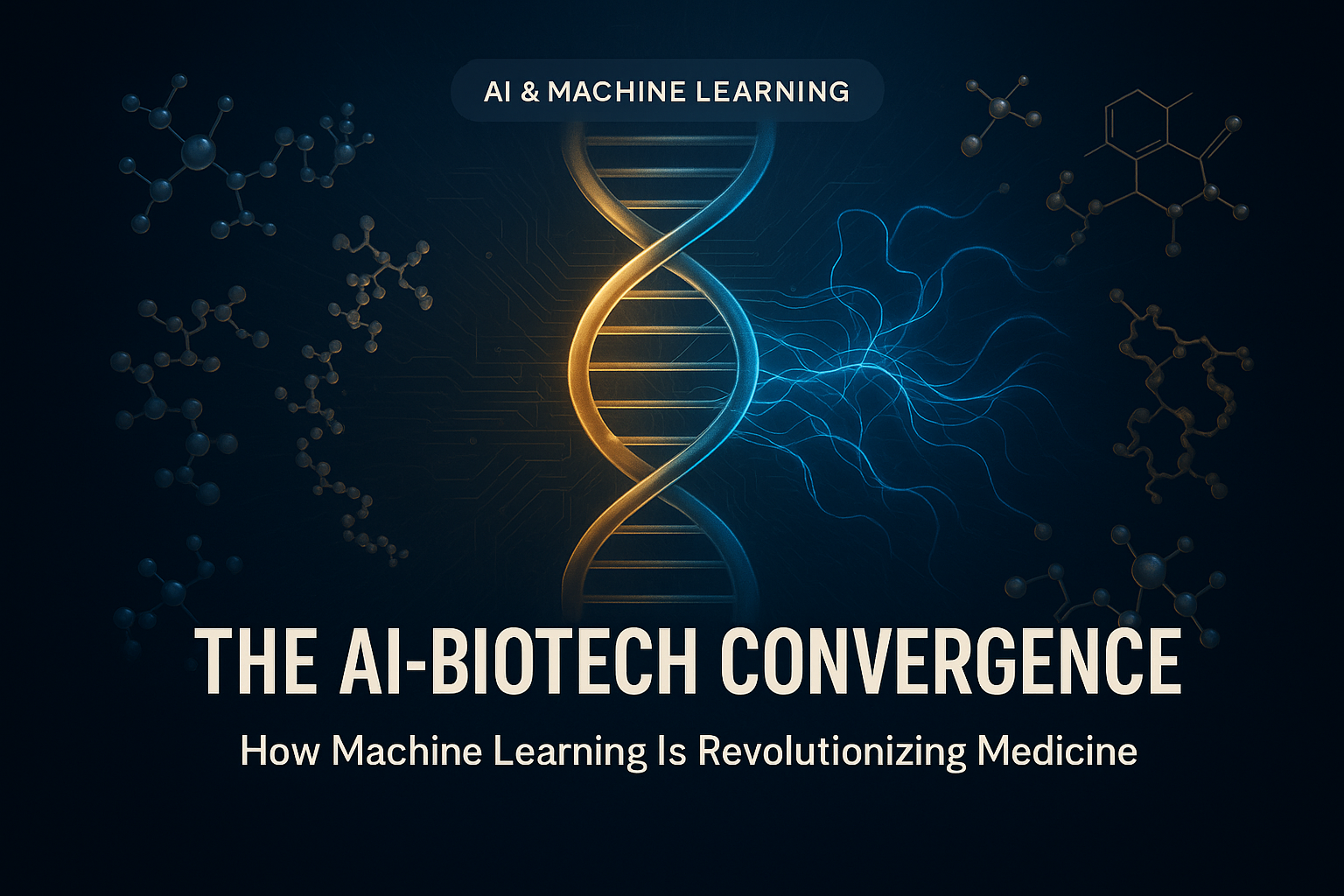
The convergence of artificial intelligence and biotechnology is no longer a future possibility—it’s happening right now, and it’s accelerating faster than industry experts predicted. As of early 2026, machine learning is fundamentally reshaping how scientists discover drugs, understand genetic sequences, and develop personalized medicine. This isn’t incremental progress; it’s a paradigm shift that will define the next decade of healthcare innovation.
The Scale of the Transformation
The numbers tell a compelling story. According to recent market analysis, the global artificial intelligence in life sciences market is estimated to grow from approximately $5.69 billion to $73.05 billion in the coming years—a more than tenfold expansion that reflects the massive capital and talent flowing into this space. This explosive growth isn’t driven by hype alone; it’s backed by concrete technological breakthroughs that are delivering measurable results in drug discovery, diagnostics, and therapeutic development.
Major AI-driven biotech companies like Recursion Pharmaceuticals, Insilico Medicine, Atomwise, and Nimbus Therapeutics are now leading the charge, operating across North America, Europe, and Asia. These organizations have moved beyond proof-of-concept and are now advancing multiple AI-discovered candidates through clinical trials—a milestone that validates the technology’s real-world applicability.
Protein Structure Prediction: AlphaFold’s Lasting Impact
One of the most transformative breakthroughs in this convergence traces back to Google DeepMind’s AlphaFold2, which earned its creators the 2024 Nobel Prize in Chemistry. This AI system solved a 50-year-old problem in structural biology: predicting how proteins fold into three-dimensional structures based on their amino acid sequences.
The impact has been staggering. AlphaFold has now predicted over 200 million protein structures—nearly all catalogued proteins known to science. This computational achievement has democratized structural biology. Researchers worldwide can instantly access accurate protein structures without spending months or years on expensive laboratory experiments. The AlphaFold Protein Structure Database has become an indispensable research tool, accelerating work across oncology, infectious disease, and rare genetic disorders.
This capability is crucial because protein structure determines function, and function determines whether a molecule can serve as an effective drug. By understanding protein architecture at atomic resolution, AI systems can now design more effective therapeutics with fewer off-target effects.
AI-Powered Drug Discovery: From Lab to Clinic
Traditional drug discovery is expensive and time-consuming. Bringing a new drug to market typically requires 10–15 years and costs billions of dollars. AI is dramatically compressing this timeline by automating the most computationally intensive steps.
Machine learning models can now:
- Screen millions of molecular candidates in silico (computationally) to identify promising compounds
- Predict toxicity and efficacy before synthesis, eliminating dead-end candidates early
- Optimize lead compounds by modeling how slight chemical modifications affect binding affinity and safety profiles
- Identify novel drug targets by analyzing vast biomedical literature and patient data simultaneously
The 2026 AI Convergence: Small Molecule Drug Discovery Summit taking place in Boston (March 18–20) brought together leading organizations like Schrödinger and industry pioneers to showcase real-world applications. Companies are now reporting that AI-assisted workflows reduce the time to identify promising drug candidates from years to months, while simultaneously improving success rates in preclinical validation.
Genomics and Personalized Medicine: The Data Revolution
Beyond drug discovery, AI is transforming how we interpret genetic information and deliver personalized treatment. Modern healthcare generates enormous volumes of genomic, clinical, and imaging data—too much for human analysts to process effectively.
AI tools now analyze complex genomic, clinical, and imaging data to spot biomarkers, predict therapy responses, and customize care plans. Machine learning models trained on millions of patient records can identify which genetic variants predict drug response, disease progression, and treatment toxicity. This enables physicians to prescribe the right drug at the right dose for each patient’s unique genetic profile.
Generative AI systems are also accelerating the discovery of new therapeutic targets by identifying hidden patterns in genomic databases, literature, and clinical outcomes. This capability is especially valuable for rare diseases, where traditional research has limited patient populations to study.
The Convergence Advantage
What makes this moment unique is the synergy between AI capabilities and biological complexity. Deep learning excels at pattern recognition in high-dimensional data—exactly what biology provides. Proteins fold according to quantum mechanical principles that are difficult for humans to predict but learnable by neural networks. Genetic variation patterns emerge from evolutionary pressure and population history—patterns that AI can extract and interpret.
The convergence also benefits from infrastructure improvements. Cloud computing enables researchers to access computational resources previously available only to tech giants. Open-source frameworks like PyTorch and TensorFlow democratize AI development. Public databases of protein structures, genomic sequences, and clinical outcomes provide training data at unprecedented scale.
Looking Ahead: The Next Frontier
As we move deeper into 2026, the integration of AI and biotechnology will deepen further. We can expect:
- More AI-discovered drugs entering clinical trials, validating the technology’s therapeutic potential
- Expansion into complex disease areas like neurodegenerative diseases and cancer immunotherapy
- Integration of multimodal AI that combines protein structure, genetic data, imaging, and clinical outcomes
- Regulatory frameworks evolving to accommodate AI-discovered therapeutics and ensure safety without slowing innovation
The competitive advantage will increasingly belong to organizations that can effectively bridge biology and computer science—teams with both domain expertise in medicine and deep technical knowledge of machine learning.
The Bottom Line
The AI-biotech convergence isn’t a trend; it’s a fundamental restructuring of how we discover and develop medicines. The convergence is accelerating because each breakthrough creates new opportunities: better protein predictions enable smarter drug design, which generates clinical data that improves future AI models, which accelerates the next generation of discoveries.
For investors, researchers, and healthcare professionals, this convergence represents both challenge and opportunity. The organizations that master the integration of AI into biotech workflows will define the next generation of pharmaceutical innovation. The question isn’t whether AI will transform biotechnology—it’s how quickly you can adapt to harness it.
What aspect of the AI-biotech convergence interests you most: drug discovery acceleration, personalized genomics, or something else entirely? Share your thoughts in the comments below.
📖 **Recommended Sources:**
• **Google DeepMind AlphaFold** – AlphaFold’s protein structure prediction