# Quantum Computing Threat to Cryptocurrency: How Blockchain Security Faces Its Greatest Challenge in 2026
The cryptographic foundations that secure billions of dollars in digital assets are under siege. As quantum computing advances accelerate, the blockchain industry faces an unprecedented security crisis that could render today’s encryption obsolete within the next decade.
The Quantum Threat: Breaking Blockchain’s Cryptographic Heart
Modern cryptocurrencies like Bitcoin and Ethereum rely on elliptic curve cryptography (ECC) and RSA encryption to secure private keys and validate transactions. These algorithms have proven mathematically resistant to classical computers—but quantum computers operate by fundamentally different principles.
A sufficiently powerful quantum computer could solve the discrete logarithm problem—the mathematical puzzle protecting cryptocurrency wallets—in hours or days, compared to thousands of years on classical systems. This isn’t theoretical speculation; it’s a recognized cryptographic vulnerability that security experts, including researchers at the National Institute of Standards and Technology (NIST), have been actively addressing.
The threat is compounded by a tactic known as “harvest now, decrypt later.” Adversaries are already collecting and storing encrypted blockchain transactions and wallet data, waiting for quantum computers to emerge. Once quantum-capable machines become available, they could retroactively decrypt historical transactions, potentially compromising the private keys of dormant wallets containing trillions in value.
Current Quantum Computing Progress and Timeline
Quantum computing has transitioned from laboratory curiosity to engineering reality. Major technology companies including IBM, Google, and IonQ have announced significant breakthroughs in qubit stability and error correction—the two critical barriers to scaling quantum systems.
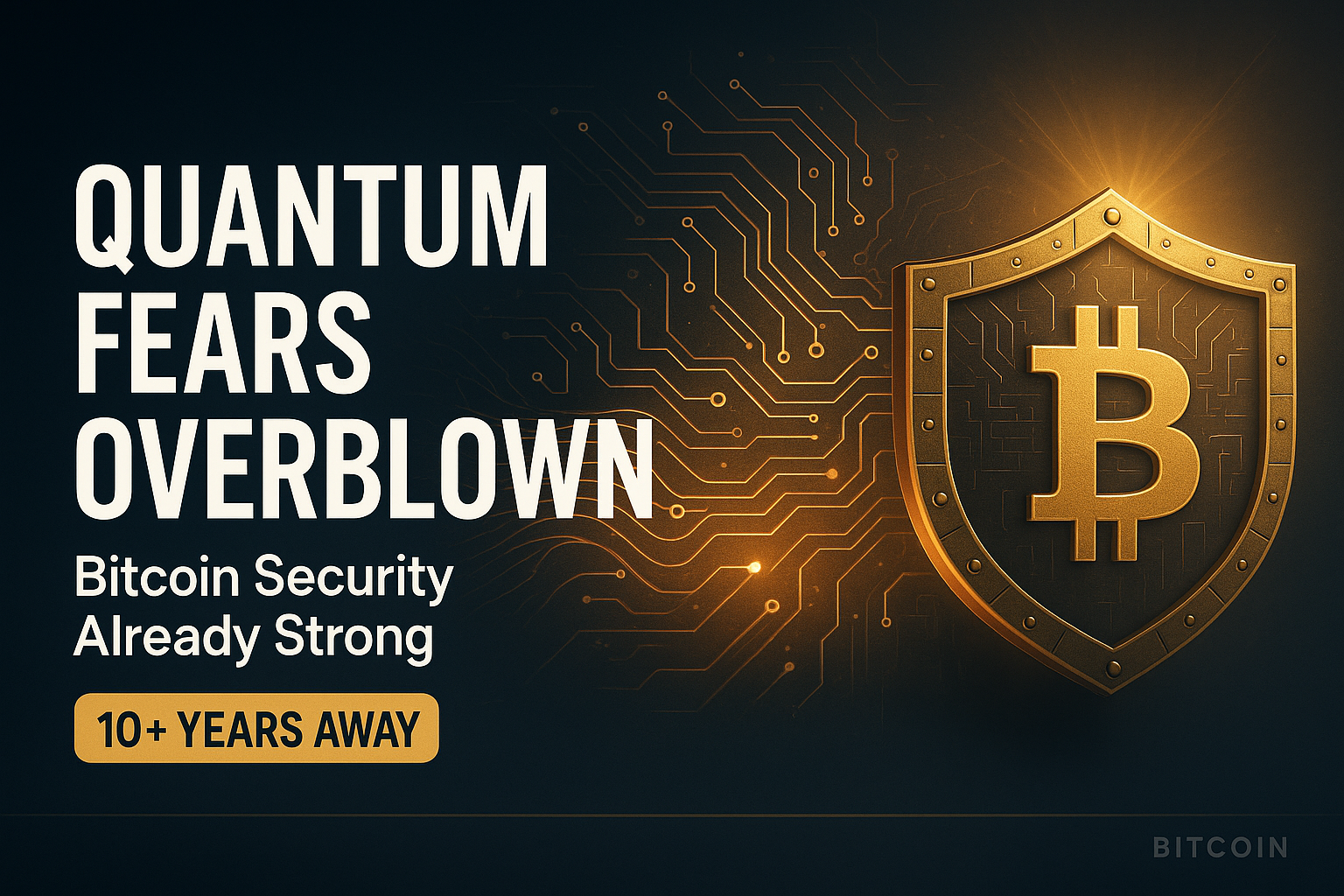
While consensus estimates suggest cryptographically-relevant quantum computers (CRQCs) remain 10-15 years away, the timeline remains uncertain. Some researchers argue the threat window could compress dramatically with unexpected breakthroughs in quantum error correction or novel qubit architectures. The cryptocurrency industry cannot afford to wait for certainty; proactive migration is essential.
Post-Quantum Cryptography: The Defensive Response
The cryptographic community has mobilized around post-quantum cryptography standards—algorithms designed to resist both classical and quantum attacks. NIST completed a multi-year standardization process in 2022, selecting four post-quantum algorithms for widespread adoption: ML-KEM (key encapsulation), ML-DSA (digital signatures), SLH-DSA (stateless hash-based signatures), and CRYSTALS-KYBER.
These algorithms rely on mathematical problems considered hard for both classical and quantum computers—such as lattice-based cryptography and hash-based signatures. Unlike ECC, which quantum computers could theoretically break, post-quantum algorithms maintain security margins against quantum adversaries.
Several blockchain projects are already exploring integration pathways. Ethereum, Bitcoin, and other major networks are evaluating how to implement post-quantum cryptography without disrupting existing ecosystems. The challenge is immense: upgrading a decentralized network with billions of transactions requires consensus among thousands of independent nodes and millions of users.
The Migration Challenge: Technical and Governance Complexity
Transitioning cryptocurrency networks to post-quantum cryptography is far more complex than upgrading traditional software systems. Blockchain networks cannot simply flip a cryptographic switch—the change must maintain backward compatibility while securing future transactions and historical wallets.
Potential migration strategies include:
- Gradual adoption: New transaction types that support post-quantum signatures, coexisting with legacy ECC-secured transactions during a transition period
- Hard forks: Network-wide upgrades that enforce post-quantum cryptography across all transactions (more disruptive but cleaner)
- Hybrid approaches: Dual-signature schemes that combine classical and post-quantum algorithms for enhanced security during the transition
Each approach carries technical risks and requires broad community consensus. Governance fragmentation could result in competing blockchain implementations with different security standards—a scenario that undermines the entire industry’s credibility.
Industry Initiatives and Emerging Solutions
The blockchain and cryptography communities are not passive. Research initiatives at institutions like MIT, Stanford, and UC Berkeley are exploring quantum-resistant blockchain architectures. Companies like Quantum Resistant Ledger (QRL) have already launched blockchain networks built on post-quantum cryptography from inception, proving the concept is viable.
Major cryptocurrency exchanges and custodians are beginning threat assessments and developing quantum-readiness roadmaps. CoinDesk and CoinTelegraph have extensively covered industry preparations, highlighting growing awareness among institutional investors and fund managers that quantum risk is a material concern affecting asset security.
Institutional adoption of quantum-resistant infrastructure will likely accelerate adoption across the broader ecosystem. When major exchanges, custodians, and institutional wallets migrate to post-quantum standards, smaller players and individual users will follow.
The Path Forward: Action Required Now
The quantum computing threat to cryptocurrency is not a distant hypothetical—it’s a present-day security challenge requiring immediate action. The industry has a narrow window to implement post-quantum cryptography before quantum computers mature.
Organizations holding significant cryptocurrency assets should begin quantum risk assessments immediately. Regulators, including those overseeing financial institutions, are likely to mandate quantum-readiness timelines within the next 2-3 years, similar to regulatory pushes for Y2K compliance in the late 1990s.
The good news: post-quantum cryptography is mature, standardized, and implementable. The challenge is coordination and political will. Blockchain networks that proactively migrate to quantum-resistant algorithms will gain competitive advantage and institutional trust. Those that delay risk becoming security liabilities in a quantum-enabled world.
As quantum computing capability accelerates, the question is no longer whether cryptocurrency networks will adopt post-quantum cryptography—it’s whether they’ll do so before the threat becomes critical.
—
📖 **Recommended Sources:**
– **NIST Post-Quantum Cryptography Project** – Official standardization of quantum-resistant algorithms (ML-KEM, ML-DSA, SLH-DSA)
– **IBM and Google Quantum Computing Announcements** – Progress on quantum hardware and error correction breakthroughs
– **CoinDesk & CoinTelegraph** – Ongoing coverage of blockchain industry quantum readiness initiatives
– **MIT & Stanford Cryptography Research** – Academic work on quantum-resistant blockchain architectures
– **Quantum Resistant Ledger (QRL)** – Real-world implementation of post-quantum blockchain networks
ⓘ **This content is AI-generated based on training data through January 2026. Please verify