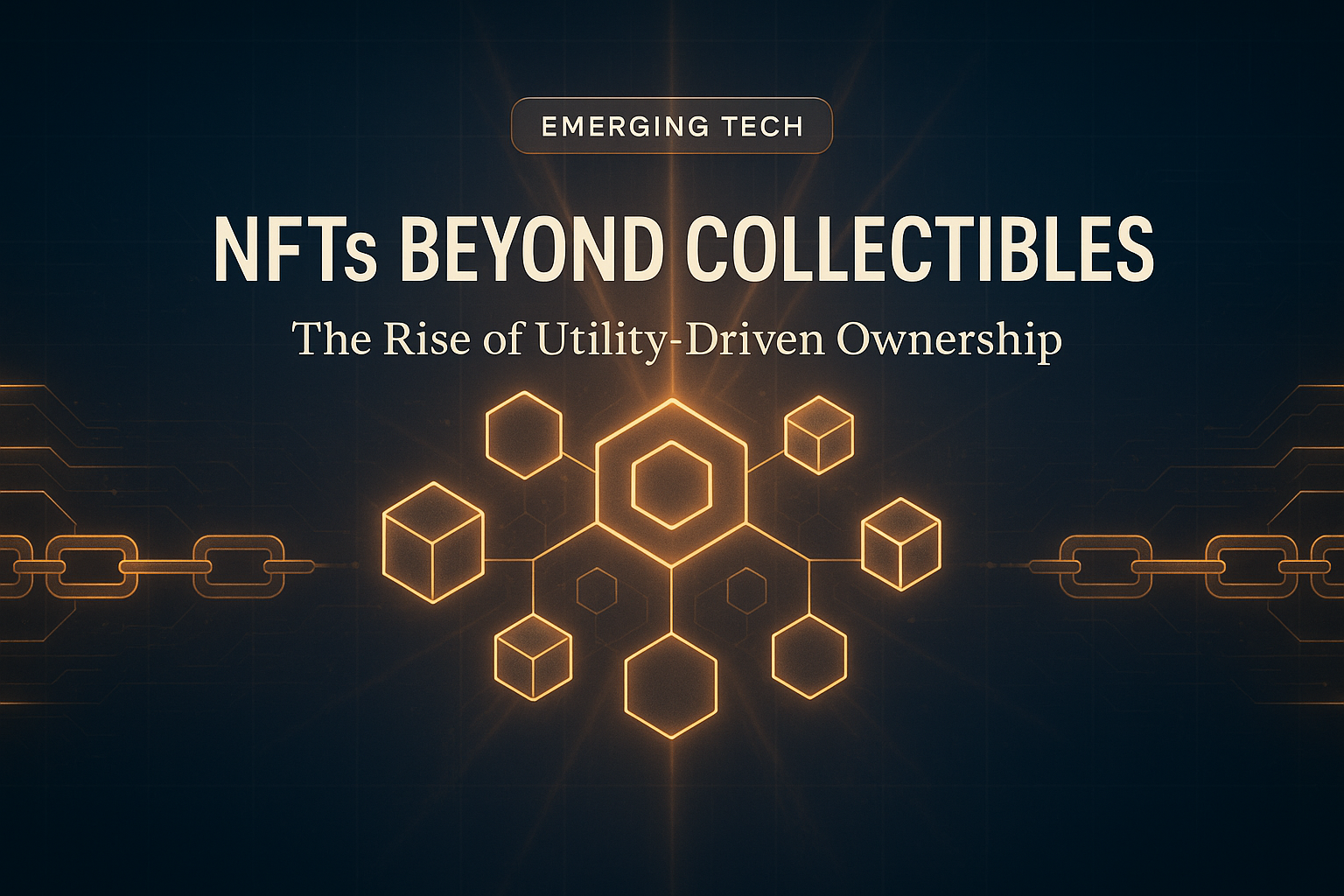
The NFT market is undergoing a fundamental transformation. What began as a speculative boom in digital collectibles is evolving into a sophisticated infrastructure for utility-driven ownership—where NFTs function as gateways to real-world value, governance rights, and functional digital assets.
As we move through 2026, the narrative around non-fungible tokens has shifted dramatically. Early NFT projects focused primarily on scarcity and collectibility, but today’s leading blockchain projects are building NFTs with embedded utility: membership access, revenue sharing, governance participation, and ownership of tangible or digital services. This evolution represents a maturation of blockchain technology from speculation to practical application.
The Shift from Collectibles to Functional Assets
The original NFT boom of 2021–2022 was largely driven by speculative trading and digital art markets. However, forward-thinking blockchain teams recognized that true value creation requires utility—tokens that serve a functional purpose beyond resale potential.
Today, utility-driven NFTs are gaining significant traction across multiple sectors. Gaming projects like Axie Infinity pioneered play-to-earn mechanics where NFT ownership directly correlates to earning potential. Enterprise platforms are experimenting with NFTs as digital certificates of authenticity, ownership records, and access credentials. Real estate tokenization projects are using NFTs to represent fractional ownership of physical properties, enabling broader investment participation.
According to industry analysis, the distinction between speculative NFTs and utility-based tokens is becoming increasingly pronounced. Projects that can demonstrate real functional value—whether through governance rights, revenue sharing, or exclusive access—are seeing stronger community retention and market resilience compared to purely collectible-focused initiatives.
Ownership Rights and Blockchain Verification
One of the most significant advantages NFTs provide is immutable proof of ownership recorded on transparent blockchain networks. This capability extends far beyond digital art into critical domains like intellectual property, supply chain verification, and identity management.
In 2026, enterprises are leveraging NFT infrastructure to establish verifiable ownership chains. A luxury brand might issue NFTs representing authentic product ownership, creating an unforgeable record that prevents counterfeiting and enables secondary market tracking. Educational institutions are minting NFTs as digital credentials—degrees, certifications, and professional licenses that holders can independently verify without relying on centralized databases.
The blockchain’s transparency creates a novel advantage: ownership history becomes permanently visible. This immutable ledger is particularly valuable in sectors where provenance matters—art authentication, supply chain transparency, and regulatory compliance. Rather than trusting a single institution’s record-keeping, stakeholders can independently verify ownership at any point in time.
Enterprise Adoption and Real-World Use Cases
Enterprise adoption of NFT technology accelerated significantly in 2025–2026, moving beyond pilot projects into production implementations. Major technology platforms and blockchain networks are now supporting enterprise-grade NFT infrastructure with improved scalability, reduced transaction costs, and regulatory clarity.
Key use cases emerging across industries include:
- Supply Chain & Logistics: Companies are using NFTs to track product authenticity and movement through global supply chains, creating transparent records accessible to all stakeholders.
- Gaming & Metaverse: In-game assets represented as NFTs provide true ownership that players can trade, transfer, or use across compatible platforms—a significant upgrade from traditional game items locked to single ecosystems.
- Membership & Access: Organizations are issuing NFTs as membership tokens that unlock exclusive content, governance voting rights, or revenue-sharing opportunities.
- Digital Rights Management: Content creators and media companies are exploring NFTs as mechanisms for licensing, royalty distribution, and rights verification.
These implementations demonstrate that utility drives adoption. Projects with clear, functional value propositions are attracting institutional interest and building sustainable user communities, while purely speculative NFT projects continue to struggle with retention and relevance.
The Future of Ownership in a Tokenized Economy
Looking ahead, the integration of NFTs into broader blockchain ecosystems suggests a future where digital and physical ownership becomes seamlessly tokenized. Emerging technologies like decentralized identity (DID) systems are combining with NFT infrastructure to create verifiable, portable credentials and ownership records that function across multiple platforms and jurisdictions.
Regulatory frameworks are also maturing. Governments and financial regulators are developing clearer guidelines around NFT classification, tax treatment, and legal enforceability. This regulatory clarity is reducing uncertainty and encouraging larger organizations to commit resources to NFT-based projects.
The convergence of utility, scalability improvements, and regulatory clarity suggests that NFTs will increasingly function as foundational infrastructure for digital ownership—less as speculative assets and more as practical tools for rights management, authentication, and value transfer.
Conclusion: From Speculation to Infrastructure
The evolution of NFTs from collectibles to utility-driven assets represents a maturation of blockchain technology. As enterprises recognize the genuine value of immutable ownership records, transparent supply chains, and programmable governance, NFTs are transitioning from speculative instruments into legitimate infrastructure for digital ownership and rights management.
The question is no longer whether NFTs will survive—but rather, how deeply will blockchain-based ownership integrate into enterprise systems, financial markets, and everyday digital life? The projects thriving in 2026 are those that have moved beyond the hype and built genuine utility. What use case do you think will drive mainstream NFT adoption in the next wave? Share your insights in the comments.
—
📖 **Recommended Sources:**
– **CoinDesk** – Comprehensive NFT market analysis and enterprise blockchain adoption trends
– **Gartner Blockchain Research** – Enterprise use cases and blockchain maturity assessments
– **Ethereum Foundation & Layer 2 Documentation** – Technical specifications for NFT utility implementations
– **Industry Case Studies** – Real-world NFT deployments in gaming, supply chain, and enterprise sectors
ⓘ This content is AI-generated based on training data through January 2026. Please verify specific claims independently with current industry reports and official project announcements.