# How AI and Blockchain Are Revolutionizing Cybersecurity in 2026
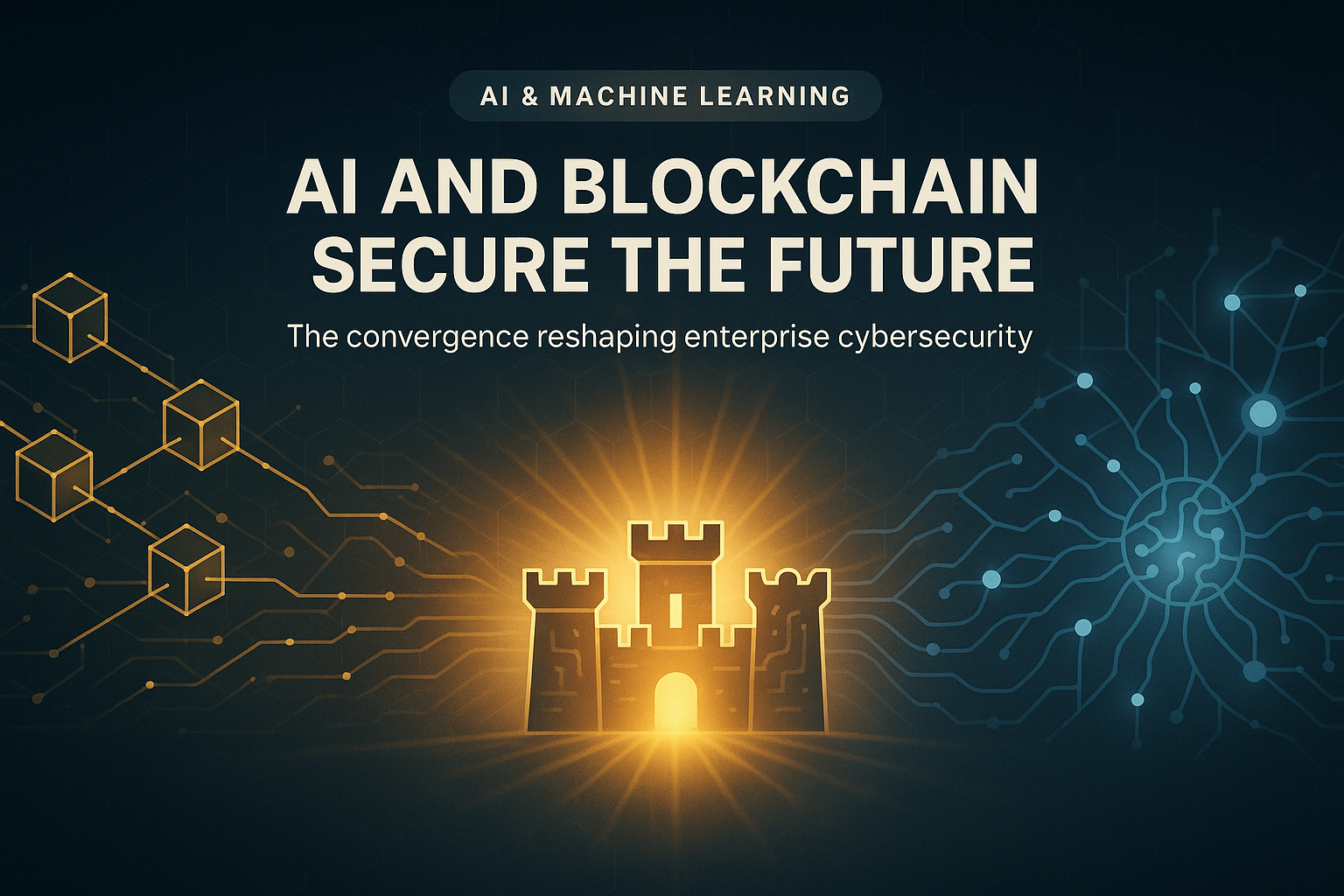
The cybersecurity landscape is undergoing a seismic shift. As artificial intelligence and blockchain technology converge, organizations are discovering a powerful synergy that transcends what either technology could accomplish alone. This fusion is not theoretical—it’s reshaping how enterprises detect threats, authenticate users, and build resilient security architectures in real time.
The Perfect Storm: Why AI and Blockchain Need Each Other
Artificial intelligence excels at pattern recognition and threat detection at scale. Machine learning models can analyze millions of security events per second, identifying anomalies that would be invisible to human analysts. AI-powered systems learn from historical breach data and adapt to emerging attack vectors autonomously—a critical advantage in an era where zero-day vulnerabilities emerge faster than traditional response protocols can address them.
However, AI systems face a fundamental vulnerability: they require trust in their decision-making processes. When an AI model blocks a transaction or flags a user as suspicious, how do we know it wasn’t compromised or manipulated by an attacker? This is where blockchain technology enters the picture.
Blockchain provides immutable auditability and decentralized verification. Every decision, every transaction, every security event can be recorded on a distributed ledger that no single entity can alter retroactively. This creates a transparent, tamper-proof record of security events—even if the AI system itself is compromised, the blockchain maintains an incorruptible audit trail.
Real-World Applications Emerging in 2026
AI-Powered Threat Detection with Blockchain Verification
Leading cybersecurity firms are implementing AI-driven threat detection systems backed by blockchain verification layers. According to industry trends documented by major security vendors, organizations are deploying machine learning models that identify suspicious behavior patterns, while blockchain networks simultaneously record and verify these detections across distributed nodes.
This approach solves a critical problem: insider threats and supply chain attacks. If a malicious actor gains access to a centralized security system, they could theoretically alter logs or suppress alerts. With blockchain, every security decision is timestamped and cryptographically signed across multiple independent nodes. Tampering becomes mathematically impossible.
Zero-Trust Architecture Enhanced by Decentralized Identity
The zero-trust security model—never trust, always verify—has become industry standard. AI accelerates zero-trust by continuously analyzing user behavior, device health, and contextual risk factors. Blockchain complements this by enabling decentralized identity and access management (IdAM).
Organizations are implementing blockchain-based credential systems where users control their own identity data through cryptographic keys, rather than relying on centralized directories vulnerable to breach. AI monitors these identity transactions in real time, flagging suspicious authentication patterns across the network instantly.
Decentralized Security Intelligence Sharing
Threat intelligence sharing has historically been siloed. Individual organizations maintain proprietary databases of detected threats, creating information asymmetries where some companies remain vulnerable to attacks others have already encountered.
Blockchain networks are enabling decentralized threat intelligence marketplaces where security data is shared pseudonymously across organizations. AI algorithms analyze this collective intelligence to predict emerging threat patterns before they materialize. This represents a fundamental shift from reactive to predictive cybersecurity—a capability that neither technology alone could deliver.
Smart Contracts for Automated Incident Response
Blockchain smart contracts are automating security incident response workflows. When AI systems detect a threat, smart contracts can automatically trigger predefined responses: isolating affected systems, revoking compromised credentials, alerting relevant stakeholders, and initiating forensic logging—all without human intervention and with complete transparency.
This combination eliminates response delays and reduces human error in critical moments. According to cybersecurity industry reports, organizations using AI-blockchain integrated systems are reducing mean time to detect (MTTD) and mean time to respond (MTTR) by significant margins compared to traditional approaches.
The Enterprise Adoption Curve
Major technology vendors and financial institutions are leading this convergence. Banks implementing blockchain-based settlement systems are pairing them with AI anomaly detection to identify fraudulent transactions in milliseconds. Cloud providers are integrating AI-powered security monitoring with blockchain audit trails to meet regulatory compliance requirements for immutable logging.
However, challenges remain. Scalability and latency are critical concerns—blockchain transactions can be slow, and adding verification overhead to real-time security decisions requires careful architectural design. Leading organizations are solving this through layer-2 scaling solutions and off-chain AI processing with on-chain verification, ensuring security decisions happen at network speed while maintaining blockchain’s integrity guarantees.
The Future: Autonomous Security Ecosystems
Looking ahead, the convergence of AI and blockchain points toward fully autonomous security ecosystems. Imagine a future where AI agents continuously monitor your digital infrastructure, automatically detect and neutralize threats, and record every action on an immutable ledger—all without human intervention, yet with complete transparency and auditability.
This isn’t science fiction. Pilot programs across financial services, healthcare, and critical infrastructure sectors are validating these concepts today. The organizations that master this synergy will have a decisive competitive and security advantage.
The Bottom Line
The combination of AI’s speed and intelligence with blockchain’s transparency and immutability represents a fundamental leap forward in cybersecurity. Organizations that integrate these technologies strategically—not as separate solutions, but as complementary components of a unified security architecture—will be the ones defending against the most sophisticated threats of the next decade.
The question for your organization isn’t whether to adopt this synergy, but how quickly you can implement it. What security challenges could your team solve if you combined AI threat detection with blockchain’s incorruptible record-keeping?
—