# Generative AI Enterprise Productivity: How Organizations Are Maximizing ROI in 2026
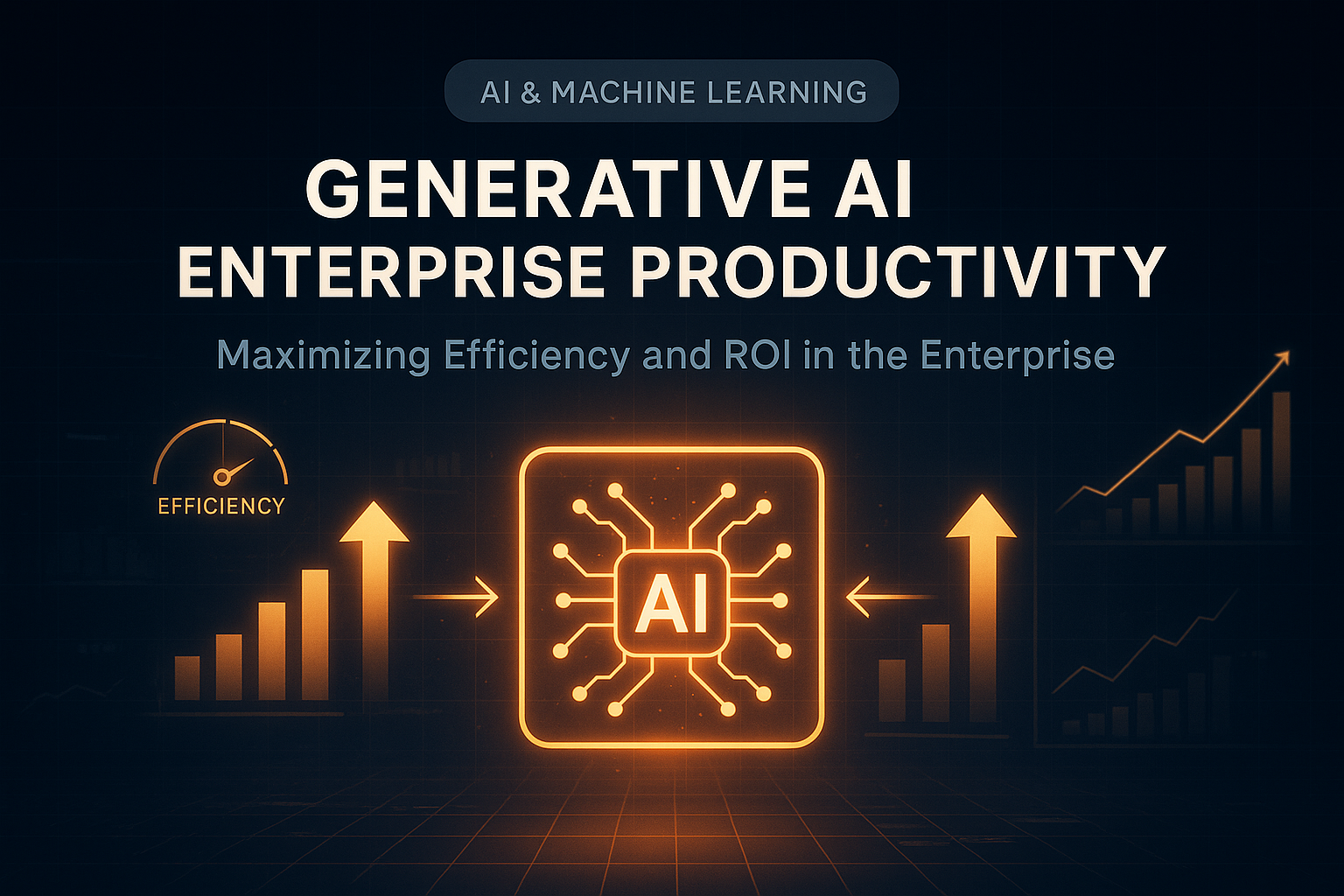
Enterprise adoption of generative AI has accelerated dramatically, moving beyond experimentation into strategic implementation. In 2026, organizations are seeing tangible productivity gains, with many reporting measurable improvements in output quality, decision-making speed, and operational efficiency.
The Current State of Enterprise Generative AI Adoption
The enterprise generative AI market has matured significantly from early hype cycles. Organizations across finance, healthcare, manufacturing, and professional services are deploying large language models (LLMs) and AI-powered tools to automate knowledge work, enhance customer interactions, and streamline complex business processes.
According to recent industry analysis, enterprise organizations are moving beyond pilot programs and scaling generative AI across multiple departments. The focus has shifted from “Can we use AI?” to “How do we maximize productivity and ensure sustainable ROI?” This pragmatic approach reflects growing confidence in AI capabilities and clearer understanding of implementation best practices.
Measurable Productivity Gains Across Key Functions
Generative AI is delivering concrete productivity improvements in several high-impact areas:
Knowledge Work Acceleration: Professionals in legal, consulting, and financial services are using AI-powered tools to draft documents, analyze contracts, and generate business intelligence reports significantly faster. Tasks that previously required hours now take minutes, freeing expert talent for higher-value strategic work.
Code Development and IT Operations: Software development teams are leveraging AI-assisted coding platforms to generate boilerplate code, identify bugs, and accelerate debugging cycles. This extends productivity beyond senior developers to enable broader technical teams to contribute more effectively.
Customer Service and Support: Generative AI chatbots and virtual assistants are handling routine inquiries with increasing sophistication, reducing response times and improving first-contact resolution rates. Human support teams can focus on complex, high-value customer issues requiring nuanced judgment.
Content and Communications: Marketing, communications, and business development teams are using generative AI to draft emails, create marketing copy, generate meeting summaries, and produce initial versions of reports—dramatically reducing time spent on routine content creation.
The Business Case: ROI and Cost Efficiency
Organizations implementing enterprise generative AI are realizing tangible financial benefits. The most successful deployments show:
- Reduced labor costs through automation of routine cognitive tasks
- Faster time-to-market for products and services due to accelerated analysis and planning cycles
- Improved decision quality through AI-enhanced data analysis and scenario modeling
- Enhanced employee retention when AI handles mundane work, allowing professionals to focus on creative, strategic tasks
However, ROI realization requires careful planning. Organizations must invest in change management, employee training, and governance frameworks to ensure AI tools are used effectively and safely. The highest-performing enterprises are those that view generative AI not as a cost-cutting tool alone, but as a capability multiplier that enables their workforce to accomplish more strategic work.
Critical Implementation Challenges
Despite strong productivity potential, enterprises face significant hurdles in scaling generative AI:
Data Quality and Security: Generative AI models require clean, well-organized training data. Many enterprises struggle with data governance, legacy system integration, and ensuring sensitive information isn’t inadvertently exposed during AI processing.
Regulatory and Compliance Risk: Industries like finance, healthcare, and legal services operate under strict compliance regimes. Deploying generative AI requires careful attention to data privacy, audit trails, explainability, and regulatory alignment.
Skills and Change Management: Effective generative AI deployment requires employees to learn new workflows and trust AI-generated outputs. Organizations underestimating training and change management efforts often see poor adoption and limited ROI.
Model Hallucinations and Accuracy: Generative AI systems can produce plausible-sounding but factually incorrect outputs. Enterprises must implement human-in-the-loop verification processes and establish clear protocols for when AI recommendations require human review.
Future Outlook: Specialized Enterprise AI
Looking ahead, the enterprise generative AI landscape is evolving toward specialized, domain-specific models rather than one-size-fits-all general-purpose systems. Organizations are fine-tuning models on proprietary data, building vertical-specific AI solutions, and integrating AI deeper into mission-critical business systems.
The competitive advantage in 2026 and beyond will go to organizations that combine robust AI infrastructure with disciplined governance, comprehensive workforce development, and clear alignment between AI investments and business strategy.
Conclusion
Generative AI has moved from emerging technology to essential enterprise infrastructure. The organizations winning in 2026 are those that view AI not as a replacement for human talent, but as a productivity multiplier that elevates what their workforce can accomplish. Success requires balancing aggressive adoption with thoughtful governance, ensuring that productivity gains translate into sustainable business value.
The question for enterprise leaders is no longer whether to adopt generative AI—it’s how to implement it responsibly and strategically to create measurable competitive advantage. What productivity challenges in your organization could generative AI address most effectively?
—
📖 **Recommended Sources:**
• **McKinsey & Company** – Research on enterprise AI adoption, productivity impact, and implementation best practices
• **Gartner** – Market analysis on enterprise generative AI tools, adoption rates, and ROI metrics
• **Industry-Specific Reports** – CIO and technology leadership publications tracking enterprise AI deployment across sectors
ⓘ This content is AI-generated based on research and training data through January 2026. Please verify specific claims, statistics, and organizational announcements independently before publication.