# Enterprise Augmented Reality in 2026: From Pilot Projects to Operational Transformation
The line between digital and physical is blurring faster than ever. Enterprise augmented reality has moved beyond experimental pilots into mission-critical operational workflows, fundamentally reshaping how organizations train workers, troubleshoot equipment, and collaborate across global teams.
The Market Explosion: AR Goes Mainstream
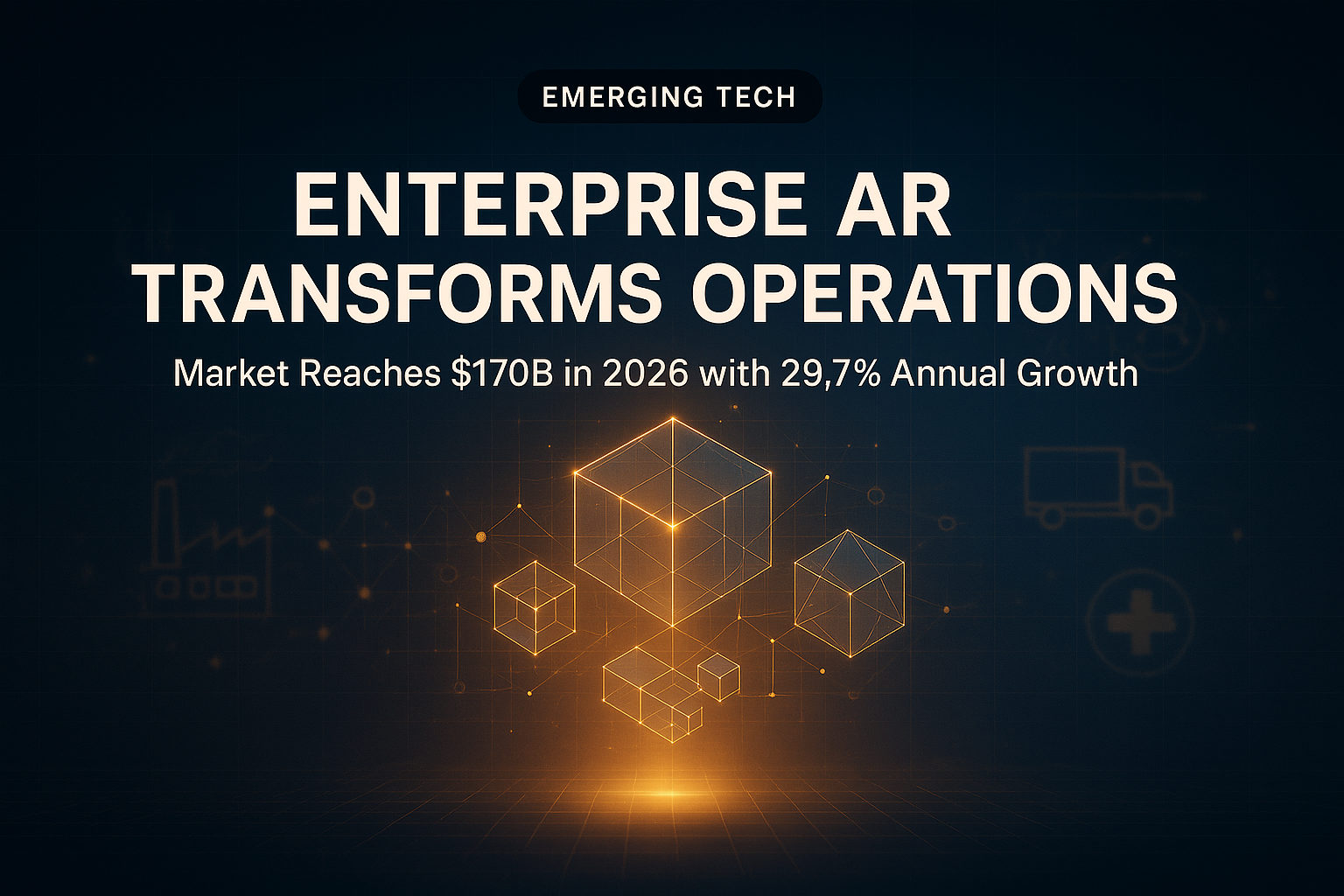
The numbers tell a compelling story. According to market research, the augmented reality market was valued at $120.2 billion in 2025 and is projected to reach $170 billion in 2026, growing at a remarkable CAGR of 29.7% through 2033, when it’s expected to reach $1.05 trillion. Even more striking, ABI Research reports that the AR hardware market alone will experience 64.8% year-over-year growth in 2026, reaching $9.7 billion.
These aren’t vanity metrics—they reflect genuine enterprise demand. Organizations have moved past asking “What can AR do?” to asking “How do we scale it across the business?”
Where Enterprise AR Delivers Real Value
Manufacturing and Maintenance Operations
In factory floors and maintenance facilities, AR is becoming indispensable. Workers equipped with AR-enabled devices can overlay digital schematics, assembly instructions, and diagnostic data directly onto physical equipment. This eliminates the need to reference separate manuals, reduces assembly errors, and dramatically cuts troubleshooting time. When a technician can see step-by-step holographic guidance while working on a complex machine, productivity soars—and mistakes become exponentially rarer.
Logistics and Supply Chain Visibility
Warehouse operations have been transformed by AR-powered picking systems. Workers wear AR glasses that display the optimal picking route, highlight items in inventory, and provide real-time inventory verification. The result: faster order fulfillment, fewer picking errors, and significantly reduced labor costs. As supply chains become increasingly complex, this operational clarity is invaluable.
Healthcare and Training
Medical professionals use AR to visualize patient anatomy during procedures, plan surgical approaches, and provide remote guidance. Beyond clinical applications, AR accelerates medical training—students can practice on virtual anatomical models before working with patients, compressing training timelines and improving outcomes.
Remote Collaboration and Field Service
Perhaps most compelling is AR’s ability to collapse distance. A field technician facing an unfamiliar problem can share their AR view with an expert thousands of miles away. The expert can annotate the technician’s view in real-time, guiding them through repairs without traveling. This has transformed field service economics, especially for high-value equipment.
The Hidden ROI: Tangible and Intangible Benefits
The business case for enterprise AR extends beyond obvious metrics. Yes, organizations see reduced downtime, faster training cycles, and fewer errors—all directly measurable. But the benefits run deeper: improved worker safety, enhanced collaboration across geographically dispersed teams, and reduced cognitive load on skilled workers.
Workers no longer need to memorize complex procedures or constantly reference external documentation. They can focus on the task at hand while AR handles information delivery. This cognitive offloading reduces fatigue, improves safety, and enables organizations to onboard workers faster.
For capital-intensive industries like manufacturing and energy, even small improvements in equipment uptime translate to millions in saved revenue. A 5% reduction in unplanned downtime can justify significant AR infrastructure investments within months.
The Adoption Trajectory: From Early Adopters to Mainstream
We’re witnessing a clear inflection point. Early adopters—primarily large enterprises with dedicated innovation budgets—have proven AR’s value. Now, mid-market organizations are moving from pilots to production deployments. Hardware is becoming more affordable, software platforms are maturing, and integration with existing enterprise systems has become more seamless.
The convergence of improved AR hardware, cloud computing, AI-powered guidance systems, and 5G connectivity is removing technical barriers that previously limited adoption. What once required specialized expertise and significant capital now fits within the reach of organizations of all sizes.
The Road Ahead: Enterprise AR as Critical Infrastructure
By 2027 and beyond, enterprise AR will likely become less of a “nice-to-have” innovation and more of a competitive necessity. Organizations that master AR-enabled operations will have measurable advantages: faster time-to-market, higher quality output, safer work environments, and lower operational costs.
The real question isn’t whether enterprise AR will become mainstream—the market data suggests it already is. The question is whether your organization will lead the transformation or play catch-up.
How is your industry thinking about AR adoption? What barriers—technical, financial, or organizational—are you encountering? Share your perspective in the comments below.
📖 **Recommended Sources:**
– **ABI Research** – AR hardware market growth forecasts and enterprise adoption trends
– **Market Research Reports** – Global AR market size projections (2025-2033)
– **Enterprise Technology Publications** – Real-world AR implementation case studies in manufacturing, healthcare, and logistics
ⓘ This content is AI-generated based on research data through July 2026. Please verify specific market figures and forecasts independently with primary sources.