# Edge Computing, AI Infrastructure, and Distributed Cloud: The Future of Cloud Computing in 2026
The cloud computing landscape is undergoing a fundamental shift. As artificial intelligence workloads explode and latency-sensitive applications demand faster response times, organizations are moving beyond traditional centralized cloud models. Edge computing, distributed architectures, and AI-optimized infrastructure are no longer emerging trends—they’re reshaping how enterprises deploy and manage their computing resources in 2026.
The Rise of Edge Computing and Distributed Architectures
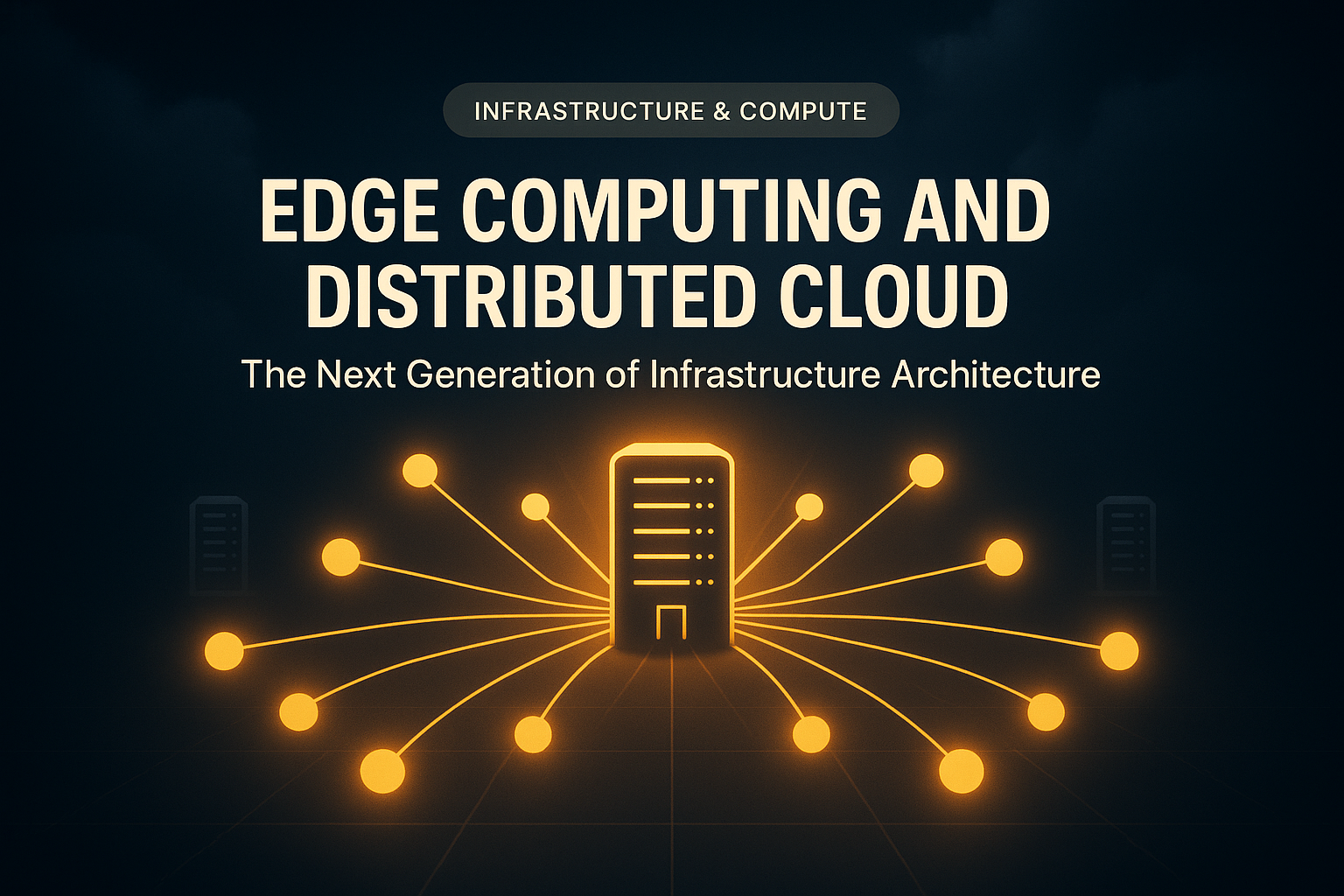
Edge computing is moving from the periphery to the center of infrastructure strategy. According to industry analysis from Gartner and IDC, enterprises are increasingly deploying compute resources closer to data sources and end users, reducing latency and improving real-time processing capabilities. This shift reflects the growing demand for applications that cannot tolerate the round-trip delays of centralized cloud data centers.
Financial services firms, autonomous vehicle manufacturers, and healthcare providers are leading this transition. Banks require sub-millisecond latency for algorithmic trading; autonomous vehicles need instant decision-making at the edge; and hospitals need real-time medical imaging analysis without cloud round-trips. Distributed cloud models—where cloud infrastructure extends beyond central data centers into regional, edge, and on-premise environments—are becoming the standard deployment pattern.
Major cloud providers including AWS (with Wavelength and Outposts), Microsoft Azure (with Azure Stack Edge), and Google Cloud are all investing heavily in edge infrastructure to support this architectural shift.
AI Workloads Driving Infrastructure Redesign
The explosion of generative AI and large language models has fundamentally changed infrastructure requirements. Data centers are being redesigned around GPU-dense, high-bandwidth architectures optimized for AI training and inference. Traditional CPU-centric infrastructure is giving way to specialized compute clusters featuring NVIDIA H100s, H200s, and emerging AI accelerators.
This transformation extends beyond hyperscaler data centers. Enterprise organizations are building specialized AI infrastructure pods—often hybrid deployments combining on-premise GPU clusters with cloud-based burst capacity. According to McKinsey research, organizations are increasingly adopting “AI infrastructure as a service” models that provide flexible access to expensive AI compute resources without massive capital expenditure.
The shift also demands new networking architectures. High-speed interconnects like NVIDIA’s NVLink and emerging technologies like optical interconnects are becoming critical infrastructure components. Supply chain complexity has intensified, with organizations competing for access to limited GPU capacity and specialized networking hardware.
Sustainability and Green Infrastructure Initiatives
Energy consumption and carbon footprint have become central to infrastructure decisions. As data centers account for approximately 2-3% of global electricity consumption, enterprises and regulators are demanding more efficient infrastructure.
Cloud providers are responding with aggressive sustainability commitments. Google, Microsoft, and AWS have announced renewable energy targets and are deploying innovative cooling technologies including liquid cooling systems and AI-driven power optimization. Hyperscalers are also investing in next-generation chip designs that deliver better performance-per-watt ratios.
For enterprises, infrastructure sustainability is now a competitive differentiator and regulatory requirement. Organizations are evaluating cloud providers not just on performance and cost, but on their environmental credentials and carbon accounting transparency.
Hybrid and Multi-Cloud Infrastructure Maturity
The days of single-cloud commitments are ending. Hybrid and multi-cloud deployments have become standard enterprise architecture, driven by the need for flexibility, risk mitigation, and vendor independence.
Kubernetes has emerged as the de facto orchestration standard, enabling workload portability across cloud providers and on-premise infrastructure. Container-native architectures and service mesh technologies are making multi-cloud deployments increasingly manageable. However, operational complexity remains high—managing infrastructure across AWS, Azure, Google Cloud, and private data centers requires sophisticated automation and observability tools.
Cloud-agnostic platforms and managed services are gaining traction as enterprises seek to reduce lock-in risks and optimize costs across multiple providers.
Security and Zero-Trust Infrastructure
Zero-trust architecture is becoming the default security model for cloud infrastructure. Rather than trusting network perimeters, organizations are implementing granular access controls, continuous verification, and microsegmentation across distributed infrastructure.
This shift is driving demand for advanced observability, identity management, and security orchestration tools that can operate seamlessly across hybrid and multi-cloud environments. The distributed nature of modern infrastructure—with compute resources spanning edge, regional, and central data centers—requires security frameworks that don’t rely on traditional network boundaries.
Looking Ahead: Infrastructure Convergence
The future of cloud infrastructure is one of intelligent distribution and specialization. We’re moving toward a model where infrastructure decisions are made dynamically based on workload requirements, latency constraints, cost optimization, and environmental impact. Edge computing won’t replace centralized clouds—instead, they’ll form an integrated continuum.
The winners in 2026 and beyond will be organizations that master infrastructure abstraction—building platforms and practices that treat compute, storage, and networking as flexible, portable resources that can be deployed and optimized across distributed environments automatically.
How is your organization adapting its infrastructure strategy to accommodate edge computing, AI workloads, and multi-cloud complexity? The infrastructure decisions you make today will define your competitive position in the AI-driven economy.
—
📖 **Recommended Sources:**
• **Gartner Cloud Infrastructure Research** – Comprehensive analysis of cloud deployment patterns, edge computing adoption, and infrastructure trends
• **McKinsey AI Infrastructure Report** – Deep dive into organizational AI infrastructure investments and hybrid deployment models
• **IDC Cloud Computing Infrastructure Forecast** – Market sizing and trend analysis for distributed and edge computing
• **AWS, Microsoft Azure, Google Cloud Official Blogs** – Real-time announcements on edge services (Wavelength, Azure Stack Edge, Distributed Cloud)
• **Bloomberg/Reuters Cloud Computing Coverage** – Current industry news and enterprise infrastructure spending trends
ⓘ This content is AI-generated based on training data through January 2026. Please verify specific claims independently, particularly regarding current product offerings and recent announcements from cloud providers.