Cloud infrastructure is no longer monolithic—it’s becoming intelligent, distributed, and fundamentally multi-cloud. As organizations scale AI workloads and demand real-time processing capabilities, the cloud infrastructure landscape of 2026 reflects a dramatic shift away from traditional centralized data center models toward edge-first architectures, AI-optimized compute, and strategic multi-cloud deployments.
The Rise of Edge Computing and Distributed Infrastructure
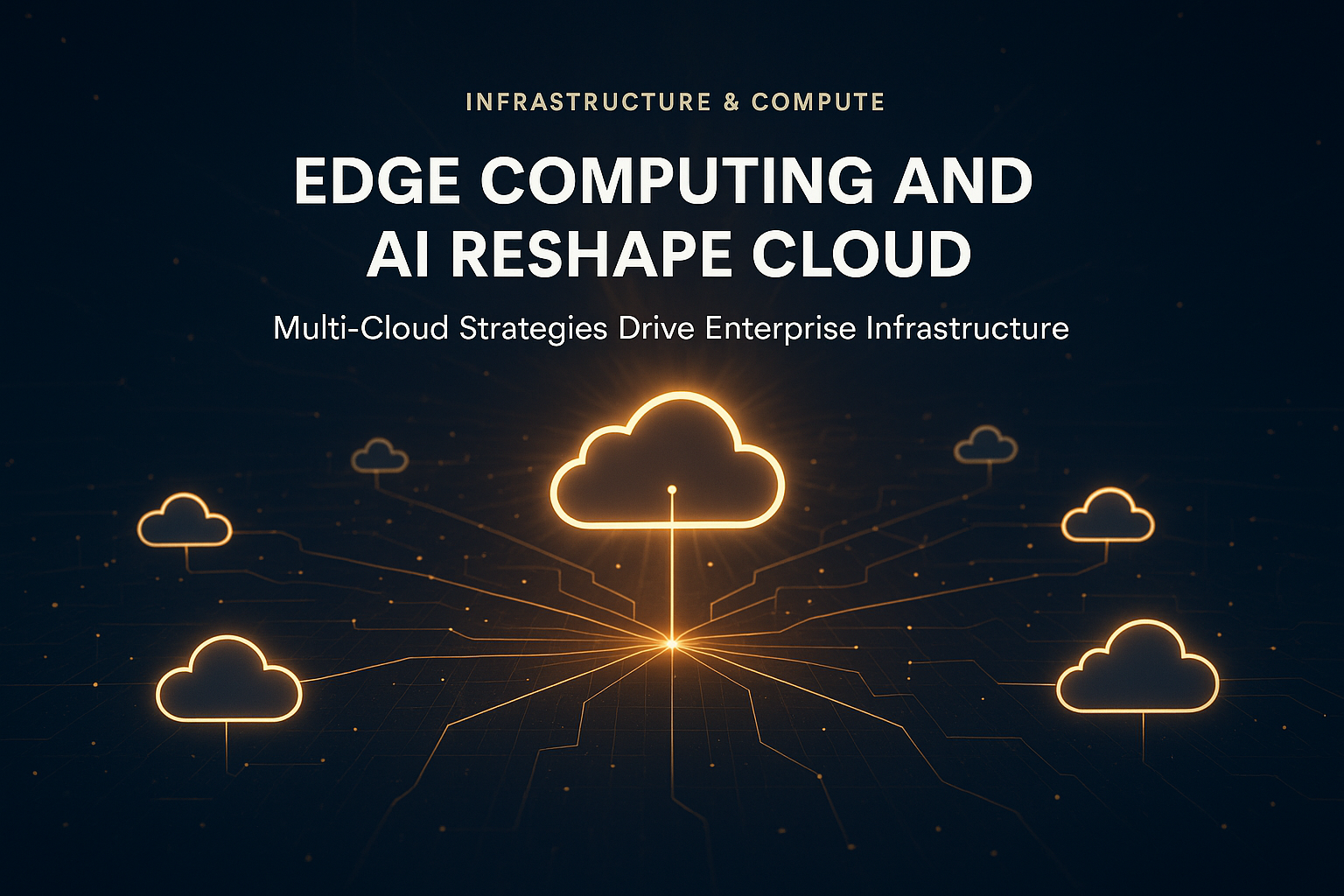
Edge computing is transitioning from an emerging concept to a core architectural requirement for enterprises managing latency-sensitive applications. According to industry analysis, organizations are increasingly deploying compute resources closer to data sources—whether in remote offices, manufacturing facilities, or IoT networks—rather than routing all processing through centralized cloud regions.
This shift is driven by several factors: AI inference at the edge requires sub-millisecond latency for real-time decision-making, autonomous systems demand immediate responsiveness, and video analytics applications generate too much raw data to efficiently transmit to central cloud infrastructure. Companies like AWS, Google Cloud, and Microsoft Azure have responded by expanding edge compute offerings—AWS Outposts, Azure Stack Edge, and Google Distributed Cloud—enabling enterprises to run cloud-native applications at the network perimeter.
The infrastructure implication is significant: enterprises are now architecting hybrid-edge-cloud systems where compute decisions are made dynamically based on workload requirements, network conditions, and cost optimization. This represents a fundamental departure from the “cloud-first” strategy of the previous decade.
AI-Optimized Infrastructure and GPU Proliferation
The explosion of AI workloads has fundamentally reshaped cloud infrastructure priorities. GPU and specialized accelerator demand continues to outpace supply, forcing cloud providers to invest heavily in infrastructure designed specifically for machine learning training and inference.
According to recent industry reports, cloud providers are deploying next-generation accelerators including NVIDIA’s H100 and H200 GPUs, custom TPUs (Google), and emerging AI-specific processors from AMD and other vendors. Beyond raw compute, infrastructure is being redesigned around AI-optimized networking, memory hierarchies, and storage systems that support the unique I/O patterns of large language models and deep learning workloads.
This trend has created a tier-based infrastructure ecosystem: premium AI-optimized instances command significant price premiums, while general-purpose compute becomes increasingly commoditized. Enterprises are responding by adopting workload-specific cloud selection strategies—running AI training on specialized infrastructure while deploying inference across cost-optimized regions and edge endpoints.
Multi-Cloud and Cloud Interoperability Strategies
The “multi-cloud” narrative has evolved from theoretical best practice to operational necessity for large enterprises. Rather than viewing cloud providers as mutually exclusive, organizations are strategically deploying workloads across AWS, Azure, Google Cloud, and specialized providers (like CoreWeave for AI infrastructure) based on capability, cost, and risk mitigation.
Gartner research indicates that enterprises with multi-cloud strategies report improved resilience, better cost optimization, and reduced vendor lock-in risks. Cloud-native technologies like Kubernetes have become the standardization layer enabling true multi-cloud portability, while emerging platforms focused on cloud orchestration and cost management are gaining significant adoption.
However, multi-cloud complexity introduces new infrastructure challenges: data gravity (the tendency of data to accumulate in one cloud), egress costs (charges for moving data between clouds), and operational complexity of managing multiple cloud platforms. Leading enterprises are addressing these challenges through cloud-agnostic architectures and dedicated multi-cloud management platforms.
Sustainability and Infrastructure Efficiency
Environmental concerns are reshaping cloud infrastructure investment priorities. Hyperscalers are deploying AI-driven resource optimization, liquid cooling systems, and renewable energy infrastructure to reduce carbon footprints. Cloud providers are publishing detailed sustainability metrics, and enterprises are increasingly factoring environmental impact into cloud provider selection decisions.
This trend is driving infrastructure innovations in power efficiency, thermal management, and workload placement algorithms that maximize utilization while minimizing environmental cost. For enterprises, this means cloud infrastructure decisions increasingly consider sustainability metrics alongside performance and cost.
The Future: Intelligent, Distributed, and Autonomous Cloud
Looking ahead, cloud infrastructure will become increasingly autonomous and self-optimizing. AI systems will manage resource allocation, cost optimization, and workload placement with minimal human intervention. Quantum computing integration into cloud platforms remains on the horizon, with major providers investing in quantum infrastructure that will eventually integrate with classical cloud systems.
The convergence of edge computing, AI-optimized infrastructure, and multi-cloud strategies suggests a future cloud landscape that is fundamentally distributed, intelligent, and application-aware—where infrastructure decisions are made dynamically based on real-time workload requirements rather than static configurations.
Key Takeaway
The cloud infrastructure of 2026 is not a single destination but a dynamic ecosystem spanning edge endpoints, AI-specialized data centers, and multi-cloud deployments. Organizations that successfully navigate this complexity by adopting cloud-agnostic architectures, investing in edge capabilities, and optimizing for AI workloads will gain competitive advantages in speed, cost efficiency, and innovation velocity.
What cloud infrastructure decisions are most critical for your organization’s competitive strategy in 2026? Share your perspective in the comments below.
—
📖 **Recommended Sources:**
• **Gartner Cloud Infrastructure Research** – Multi-cloud adoption trends, cloud provider capabilities, and enterprise cloud strategies
• **IDC Infrastructure Intelligence** – Cloud infrastructure market analysis, spending trends, and technology adoption forecasts
• **AWS, Microsoft Azure, Google Cloud Official Blogs** – Latest infrastructure announcements, edge computing offerings, and AI infrastructure updates
• **CoinDesk Infrastructure Reports** – Emerging cloud computing technologies and distributed infrastructure trends
ⓘ This content is AI-generated based on research through February 2026. Please verify specific statistics and latest announcements independently through official cloud provider documentation and analyst reports.