AI in Drug Discovery: The Biotech Revolution Accelerating Innovation
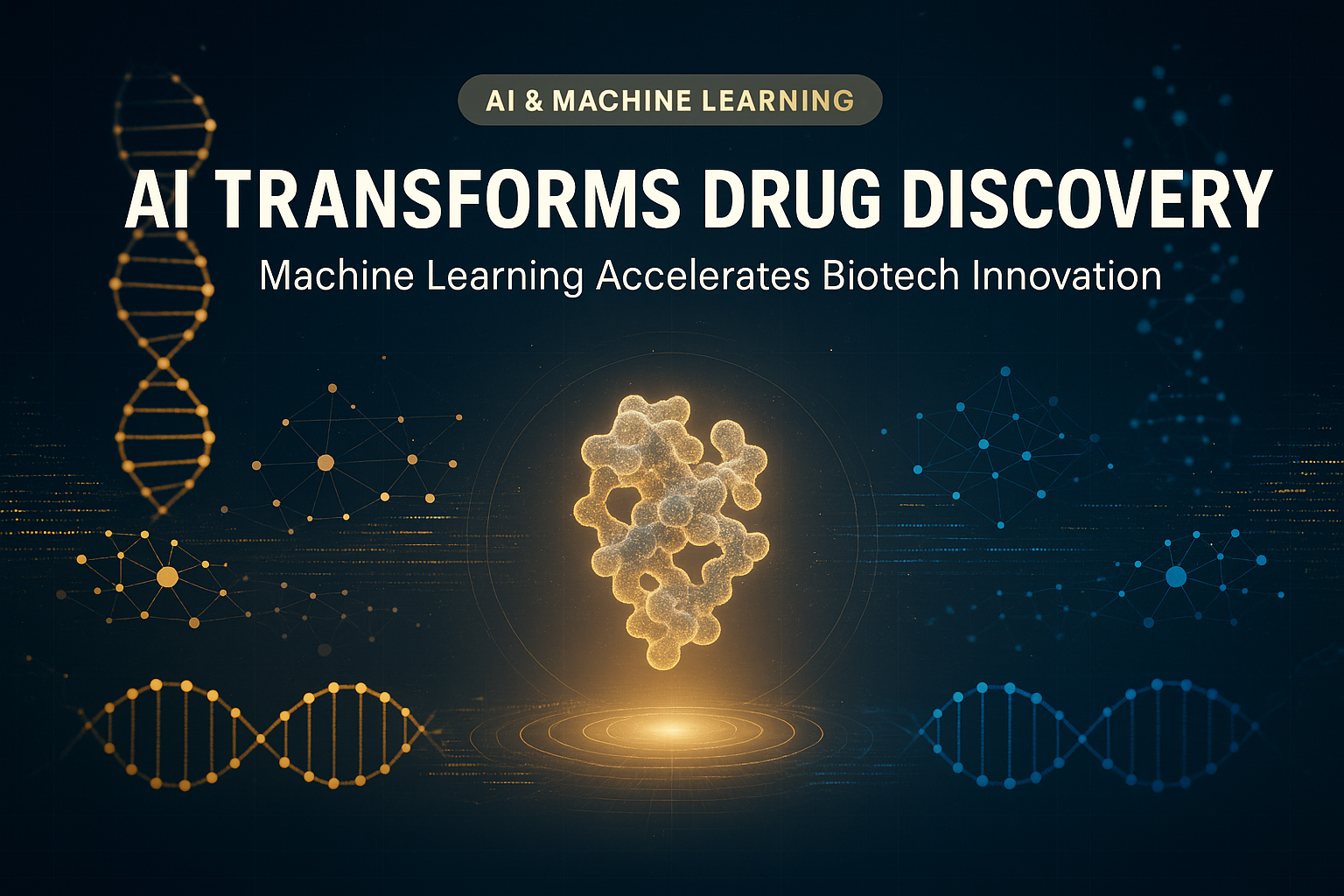
The pharmaceutical industry is experiencing a fundamental transformation. Where traditional drug discovery once required 10–15 years and billions of dollars, artificial intelligence is compressing timelines, reducing costs, and unlocking treatments that were previously considered undiscoverable. In 2026, AI has moved from theoretical promise to clinical reality, reshaping how biotechnology companies identify, design, and validate new drugs.
The AI Drug Discovery Paradigm Shift
For decades, pharmaceutical researchers relied on high-throughput screening—testing thousands of chemical compounds against biological targets in physical laboratories. It was effective but slow and expensive. AI fundamentally changes this equation by enabling computational drug discovery: algorithms that learn from vast datasets to predict which molecular structures will be effective against disease targets.
According to industry research from leading biotech analysts, AI-powered drug discovery platforms can screen millions of potential compounds in silico (computationally) before a single molecule is synthesized in the lab. This reduces the number of wet-lab experiments required and accelerates the path to promising candidates. The result is faster timelines, lower R&D costs, and a higher success rate in early-stage development.
AlphaFold and Protein Structure Prediction: The Game-Changer
One of the most transformative AI breakthroughs in biotechnology has been protein structure prediction. DeepMind’s AlphaFold, which won the prestigious CASP competition in 2020 and released its full database in 2021, solved a 50-year-old problem: predicting how amino acid sequences fold into three-dimensional protein structures.
This matters enormously for drug discovery. Understanding a protein’s 3D structure is critical for designing drugs that bind to it precisely. Before AlphaFold, determining these structures experimentally through X-ray crystallography or cryo-EM could take months or years per protein. AlphaFold can predict structures in hours, with remarkable accuracy. Pharmaceutical companies and biotech startups are now using AlphaFold predictions to accelerate target identification and rational drug design.
The impact is already visible in clinical pipelines. Several drug candidates currently in human trials were identified or optimized using AI-predicted protein structures, demonstrating that computational insights translate into real therapeutic progress.
Machine Learning for Target Identification and Validation
Beyond structure prediction, AI excels at identifying disease targets—the specific proteins or pathways involved in a disease that a drug could modulate. Machine learning models trained on genomic data, biomarker databases, and clinical records can identify novel targets that human researchers might overlook.
Biotech companies like Exscientia, Atomwise, and others have built proprietary AI platforms that integrate multi-omics data (genomics, proteomics, transcriptomics) to nominate new targets for specific diseases. This is particularly valuable in oncology, neurodegenerative diseases, and rare genetic disorders where patient populations are small and traditional screening approaches are impractical.
According to recent biotech industry reports, AI-identified targets show higher success rates in preclinical validation compared to traditionally identified targets. This suggests that machine learning is not just faster—it’s smarter about which targets are worth pursuing.
Accelerating Clinical Trial Design and Patient Recruitment
AI’s impact extends beyond the bench into clinical development. Machine learning algorithms are now optimizing clinical trial design, predicting patient populations most likely to respond to a drug, and accelerating patient recruitment.
Pharmaceutical companies are using AI to analyze historical trial data and identify biomarkers that predict treatment response. This enables more targeted trial designs with smaller, more homogeneous patient populations—reducing trial costs and timelines. Additionally, AI-powered patient matching platforms help identify eligible trial participants from electronic health records, addressing one of the biggest bottlenecks in clinical development.
Real-World Impact: From Lab to Market
Several tangible examples illustrate AI’s role in accelerating drug discovery:
- Exscientia’s AI-designed molecule entered human trials in 2021, marking the first drug candidate discovered entirely using AI. The company compressed what traditionally takes 4–6 years into 12 months.
- DeepMind’s collaborations with pharmaceutical partners have applied AlphaFold to high-priority disease targets, including antibiotic resistance and neglected tropical diseases.
- Atomwise and other AI platforms have moved multiple candidates into preclinical and clinical development, demonstrating the reproducibility of AI-driven discovery.
These examples are no longer outliers—they represent an emerging standard in biotech innovation.
The Future of AI-Driven Drug Discovery
Looking ahead, the convergence of large language models, generative AI, and multi-modal machine learning will further accelerate drug discovery. Emerging AI systems can not only predict protein structures but also generate novel molecular designs that meet specific therapeutic criteria. Generative models trained on chemical databases can propose entirely new compounds with desired properties—a capability that could unlock treatments for previously intractable diseases.
Regulatory agencies including the FDA are also adapting, with growing guidance on how AI-derived data and predictions can be incorporated into regulatory submissions. This institutional support will further accelerate the adoption of AI-driven approaches across the pharmaceutical industry.
Conclusion: The New Standard in Biotech
AI is no longer a speculative technology in drug discovery—it is a proven accelerator reshaping how the pharmaceutical industry operates. By compressing timelines, reducing costs, and improving success rates, AI-powered approaches are democratizing drug discovery and bringing life-saving treatments to patients faster than ever before.
The question for biotech companies and pharmaceutical leaders is no longer whether to adopt AI, but how to integrate it most effectively into their discovery pipelines. Organizations that master AI-driven drug discovery will gain a significant competitive advantage in bringing innovations to market.
What emerging AI technologies do you think will have the most impact on drug discovery in the next five years? Share your insights in the comments below.
📖 **Recommended Sources:**
– **DeepMind AlphaFold & Protein Structure Database** – Foundational AI breakthrough in protein prediction, widely adopted in drug discovery
– **Nature Biotechnology & Nature Machine Intelligence** – Peer-reviewed research on AI applications in pharmaceutical development
– **Exscientia and Atomwise Case Studies** – Real-world examples of AI-accelerated drug discovery from leading biotech AI platforms
– **FDA Guidance on AI/ML in Drug Development** – Regulatory perspective on integrating computational approaches into clinical pipelines
ⓘ This content is AI-generated based on training data through January 2026. Please verify specific claims independently with current industry sources.