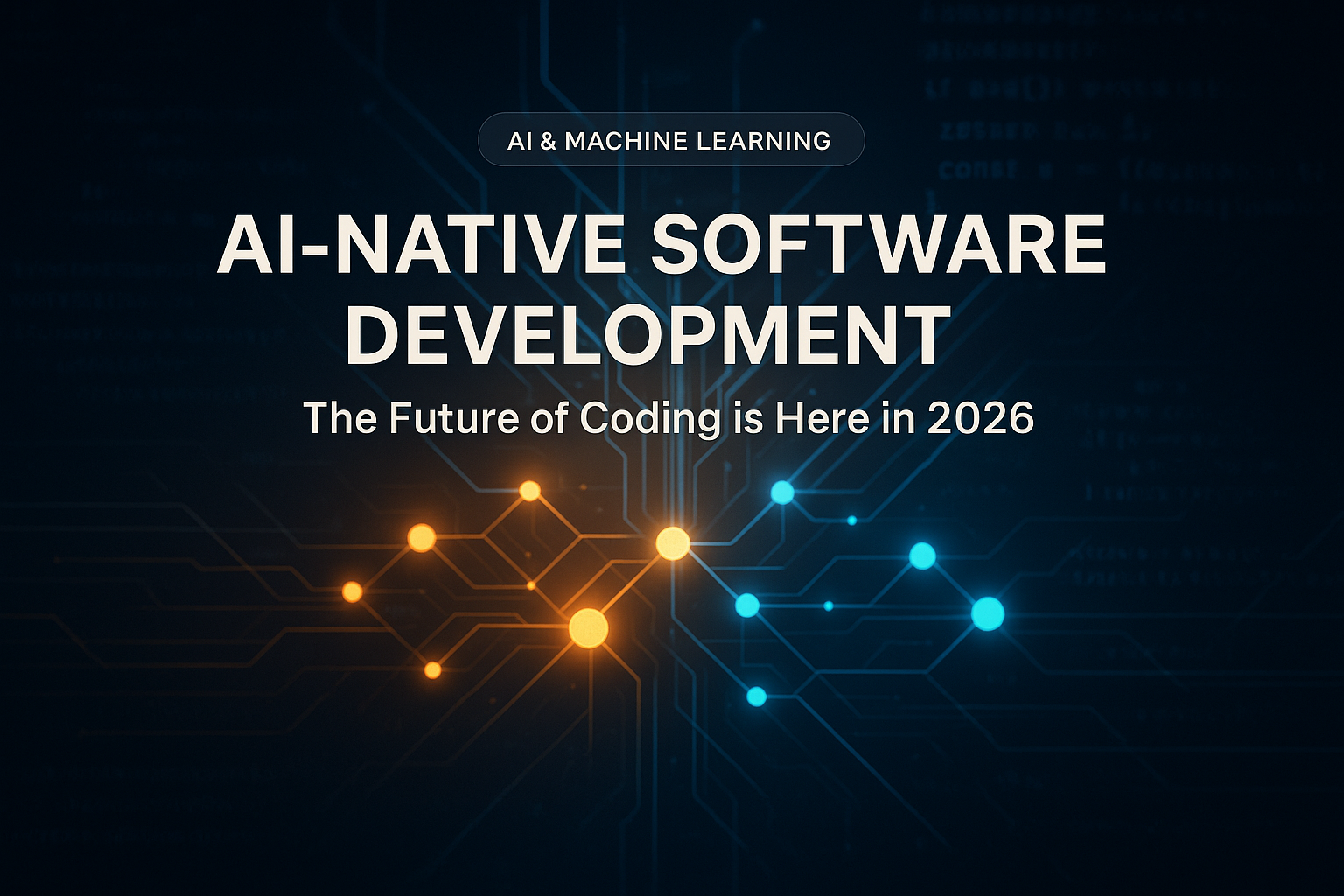
The Rise of AI-Native Software Development
The software development landscape is undergoing a fundamental transformation. AI-native development is no longer a futuristic concept—it’s becoming the operational standard for forward-thinking engineering teams in 2026. From startups to Fortune 500 enterprises, organizations are integrating AI-powered coding assistants, intelligent debugging tools, and machine learning-driven architecture into their development workflows.
This shift represents more than incremental improvement. It’s a paradigm change in how developers conceptualize problems, write code, and collaborate with intelligent systems. The question is no longer whether to adopt AI-native development practices, but how quickly teams can adapt to remain competitive.
What Defines AI-Native Development?
AI-native software development refers to development practices and architectures designed from the ground up to leverage artificial intelligence throughout the entire software lifecycle. Unlike traditional development augmented with AI tools, AI-native approaches embed AI decision-making into core processes: code generation, testing, optimization, and deployment.
Key characteristics of AI-native development include:
- Intelligent code generation powered by large language models that understand context and project-specific patterns
- Automated testing and quality assurance using AI to predict failure points and generate comprehensive test suites
- Real-time code optimization where AI suggests performance improvements and refactoring opportunities
- Intelligent debugging that identifies root causes and proposes fixes with minimal human intervention
- Predictive architecture planning using AI to forecast scalability challenges and recommend solutions
Platforms like GitHub Copilot (Microsoft), Claude for Developers (Anthropic), and Amazon CodeWhisperer exemplify this evolution. These tools have moved beyond autocomplete suggestions to become active participants in the development process, understanding business logic and generating entire functions, modules, or even microservices.
Enterprise Adoption Accelerating Rapidly
Enterprise adoption of AI-native development tools has reached critical mass in 2026. According to industry surveys and developer community reports, organizations report measurable improvements in developer productivity, code quality, and time-to-market when implementing AI-assisted workflows.
Productivity gains are particularly noteworthy. Developers using AI-native platforms report completing routine coding tasks 30-50% faster, freeing cognitive resources for higher-level problem-solving, system design, and innovation. This doesn’t eliminate the need for skilled engineers—it elevates their focus to where human creativity and judgment matter most.
However, enterprise adoption extends beyond individual productivity. Organizations are building AI-native architectures where microservices are designed with AI-driven scaling, monitoring systems use machine learning for anomaly detection, and deployment pipelines leverage AI for intelligent release management. This holistic approach represents a fundamental shift in how teams think about software systems.
The challenge for enterprises isn’t technical viability—it’s governance, security, and cultural adaptation. Teams must establish guardrails around AI-generated code, ensure compliance with regulatory requirements, and invest in upskilling developers to work effectively alongside AI systems.
The Developer Experience Revolution
The developer experience (DX) in 2026 looks radically different from five years ago. Natural language interfaces allow developers to describe what they want to build, and AI systems generate functional code. This democratizes software development, enabling non-traditional developers to contribute meaningfully to codebases.
Debugging has transformed as well. Rather than manually stepping through code, developers describe unexpected behavior, and AI systems analyze logs, traces, and code patterns to pinpoint root causes. This shift reduces the cognitive load of debugging and accelerates issue resolution.
Collaborative development has also evolved. AI systems can now serve as intelligent code reviewers, catching logic errors, security vulnerabilities, and performance issues before human review. This augments (not replaces) peer review processes, creating a more robust quality gate.
The psychological impact shouldn’t be underestimated either. Developers report higher job satisfaction when freed from repetitive coding tasks. The role shifts from “code writer” to “system architect” and “problem solver,” which appeals to many engineers’ intrinsic motivations.
Security and Quality Challenges
With great power comes responsibility. AI-generated code quality remains a critical concern for enterprises. While modern AI models produce functional code, they can introduce subtle vulnerabilities, performance inefficiencies, or architectural inconsistencies if not properly validated.
Leading organizations implement multi-layer validation strategies:
- Automated security scanning of AI-generated code
- Mandatory code review processes for AI contributions
- Comprehensive testing requirements before deployment
- Continuous monitoring for anomalies in production
Additionally, intellectual property concerns persist. Organizations must establish clear policies around code training data, ensure compliance with open-source licenses, and maintain transparency about which code was AI-generated versus human-written.
The most mature AI-native teams treat AI tools as intelligent assistants requiring human oversight, not autonomous code generators. This human-in-the-loop approach balances productivity gains with quality and security requirements.
The Future of AI-Native Development
Looking ahead, the convergence of larger language models, domain-specific AI systems, and advanced reasoning capabilities will push AI-native development further. We can expect:
- Autonomous code review and refactoring that continuously improves existing codebases
- AI-driven architecture decisions based on organizational goals and technical constraints
- Predictive maintenance where AI anticipates and prevents production issues
- Cross-domain development where AI bridges traditionally separate specialties (frontend, backend, DevOps, data engineering)
The most successful organizations in 2026 aren’t those with the most advanced AI tools—they’re those who’ve reimagined their development processes around AI capabilities while maintaining rigorous quality standards and human expertise.
The Bottom Line
AI-native software development is reshaping how teams build, test, and deploy software. It’s not about replacing developers; it’s about amplifying their capabilities and redirecting their focus toward innovation and strategic problem-solving. Organizations that embrace AI-native practices thoughtfully—with proper governance, security measures, and cultural change management—will outpace competitors in velocity, quality, and developer satisfaction.
The question for your team isn’t whether to adopt AI-native development, but how to do it responsibly and effectively. What’s your organization’s current approach to integrating AI into your development workflow?
—
📖 **Recommended Sources:**
– **GitHub Blog & Copilot Research** – Real-time insights on AI-assisted development adoption and developer productivity metrics
– **Anthropic Claude Documentation** – Developer-focused AI capabilities and enterprise implementation patterns
– **Stack Overflow Developer Survey 2026** – Industry-wide trends on AI tool adoption and developer sentiment
– **McKinsey AI Reports** – Enterprise AI implementation strategies and ROI analysis for development teams
ⓘ *This content is AI-generated based on training data through January 2026 and May 2026 research. Please verify specific adoption statistics independently with current industry reports.*