# AI for Scientific Discovery 2026: How Machine Learning Is Transforming Research
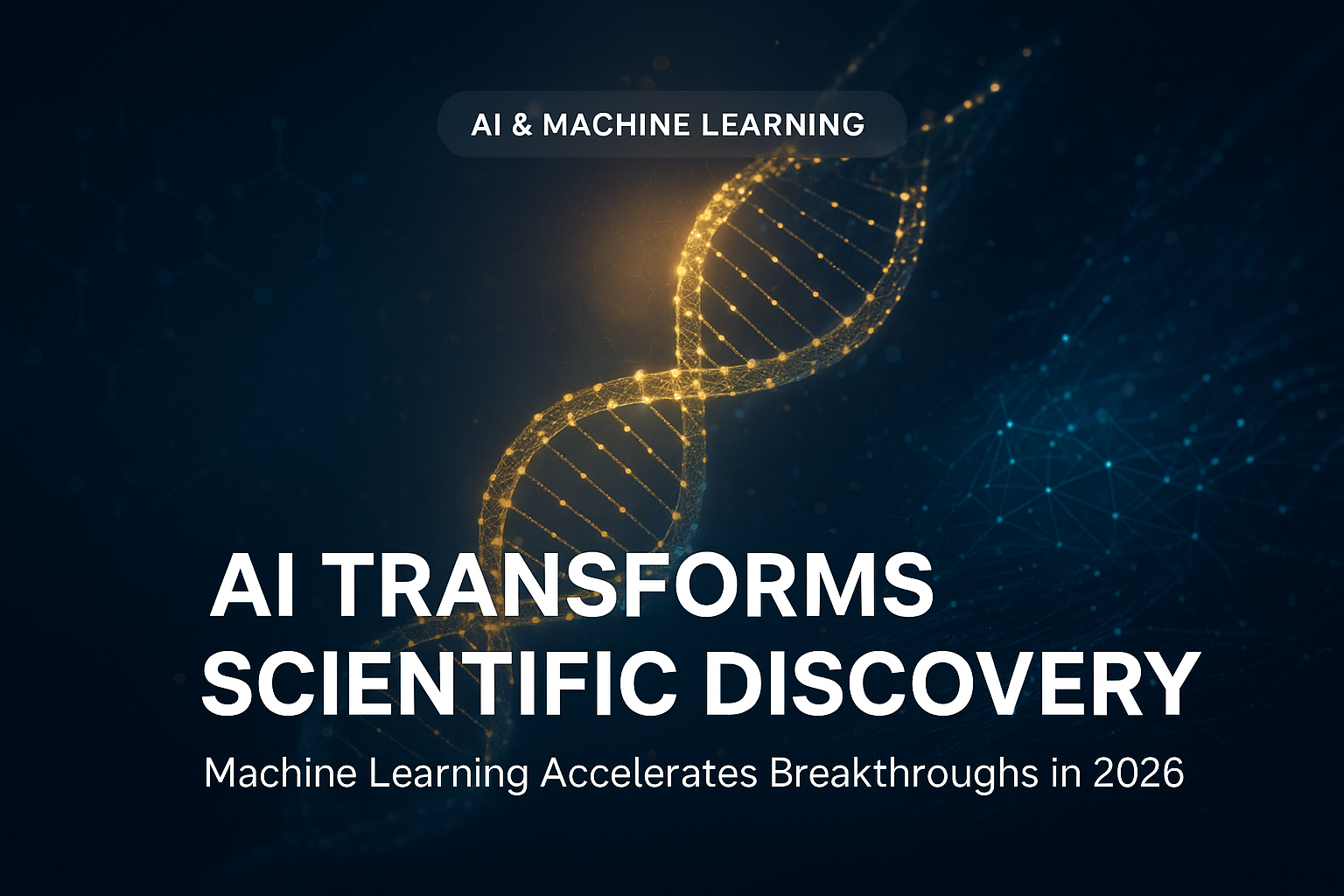
The pace of scientific discovery is accelerating at an unprecedented rate, and artificial intelligence is the catalyst driving this transformation. In 2026, machine learning has evolved from a supporting tool into a primary engine of innovation across pharmaceuticals, materials science, biology, and physics. From predicting protein structures to designing new medicines, AI is fundamentally reshaping how researchers approach complex scientific challenges.
The Protein Folding Revolution: AlphaFold and Beyond
One of the most significant breakthroughs in AI-driven science comes from Google DeepMind’s AlphaFold, which solved the protein structure prediction problem that had stumped researchers for decades. AlphaFold predicts a protein’s 3D structure from its amino acid sequence with remarkable accuracy, enabling scientists to understand biological mechanisms and design targeted therapies.
By 2026, this technology has matured beyond its initial breakthrough. The scientific community has moved from asking “can AI predict protein structures?” to “how do we leverage this capability at scale?” Researchers are now using AlphaFold predictions to accelerate drug discovery pipelines, reduce experimental costs, and identify novel therapeutic targets. The impact extends beyond pharmaceuticals—materials scientists are applying similar deep learning methods to predict material properties and design new compounds with unprecedented speed.
This shift represents a fundamental change in the scientific method: hypothesis-driven research is increasingly augmented by AI-driven exploration, where machine learning identifies promising candidates before expensive wet-lab validation begins.
Machine Learning Accelerates Drug Discovery Timelines
The pharmaceutical industry has embraced machine learning as a strategic imperative. According to industry symposiums and research initiatives in 2026, machine learning in drug discovery has become standard practice rather than experimental niche. The applications span the entire drug development pipeline: target identification, lead compound optimization, toxicity prediction, and clinical trial design.
The economic implications are substantial. Traditional drug discovery takes 10-15 years and costs billions of dollars. AI-powered approaches compress these timelines by months or years by:
- Predicting molecular interactions before synthesis
- Identifying off-target effects using neural networks trained on biological databases
- Optimizing compound structures through generative AI models
- Prioritizing clinical candidates based on machine learning risk assessments
Major pharmaceutical companies and biotech startups are investing heavily in AI infrastructure, recognizing that competitive advantage now depends on computational capability alongside traditional medicinal chemistry expertise. The 2026 Machine Learning in Drug Discovery Symposium highlights this momentum, showcasing recent progress in applying neural networks, graph-based learning, and transformer models to accelerate therapeutic development.
Deep Learning in Materials Science and Physics
Beyond biology, deep learning is transforming materials science by enabling researchers to discover novel compounds with specific properties—semiconductors, batteries, catalysts, and superconductors. Machine learning models trained on vast materials databases can predict material properties and suggest new compositions faster than traditional computational methods.
In physics, AI is being integrated into discovery pipelines for complex phenomena like nuclear fusion research. Deep learning methods are helping researchers understand high-dimensional data, identify patterns in experimental results, and optimize reactor designs. This application exemplifies how modern machine learning is becoming essential infrastructure for tackling problems that involve massive data volumes and non-linear relationships.
The Convergence: AI as a Scientific Partner
A critical trend emerging in 2026 is the shift from viewing AI as a tool to recognizing it as a collaborative scientific partner. Rather than replacing human researchers, AI augments their capabilities by:
- Processing vast scientific literature and identifying novel connections
- Generating and testing hypotheses computationally before laboratory work
- Automating routine analysis, freeing researchers for creative problem-solving
- Discovering patterns invisible to human intuition in complex datasets
This human-AI collaboration model is proving most effective. Scientists provide domain expertise, creative direction, and validation, while AI handles computational heavy lifting and pattern recognition. The result is accelerated research momentum and more efficient resource allocation.
Future Outlook: 2026 and Beyond
As we move deeper into 2026, several trends are shaping the future of AI-driven science. Quantum computing integration with machine learning is advancing, promising even faster molecular simulations and materials discovery. Simultaneously, federated learning and privacy-preserving AI are enabling researchers to collaborate across institutions without sharing sensitive data—critical for pharmaceutical and biotech applications.
The infrastructure supporting AI-driven science is also evolving. Cloud platforms, specialized hardware, and open-source frameworks are democratizing access to these tools, allowing smaller research groups and academic institutions to compete with well-funded corporations. This democratization will likely accelerate the pace of discovery across all scientific disciplines.
The Bottom Line
AI for scientific discovery is no longer a future possibility—it’s the present reality reshaping how research is conducted. From protein structure prediction to drug design to materials innovation, machine learning is compressing decades of traditional research into months of computational work. Organizations that embrace AI-augmented research workflows will likely lead their fields, while those that resist risk falling behind.
The question is no longer whether AI will transform science, but how quickly researchers and institutions can adapt their processes, hire talent, and build the infrastructure to harness this powerful technology.
How is your organization leveraging AI for research acceleration? Share your insights in the comments below.
—
📖 **Recommended Sources:**
– **Google DeepMind AlphaFold Research** – Protein structure prediction and its applications in drug discovery and materials science
– **2026 Machine Learning in Drug Discovery Symposium** – Industry progress and best practices in applying ML to pharmaceutical development
– **AI Trends 2026 Reports** – Analysis of AI as collaborative scientific partner and infrastructure evolution
ⓘ *This content is AI-generated based on research through April 2026. Please verify specific claims and latest developments independently with primary sources.*