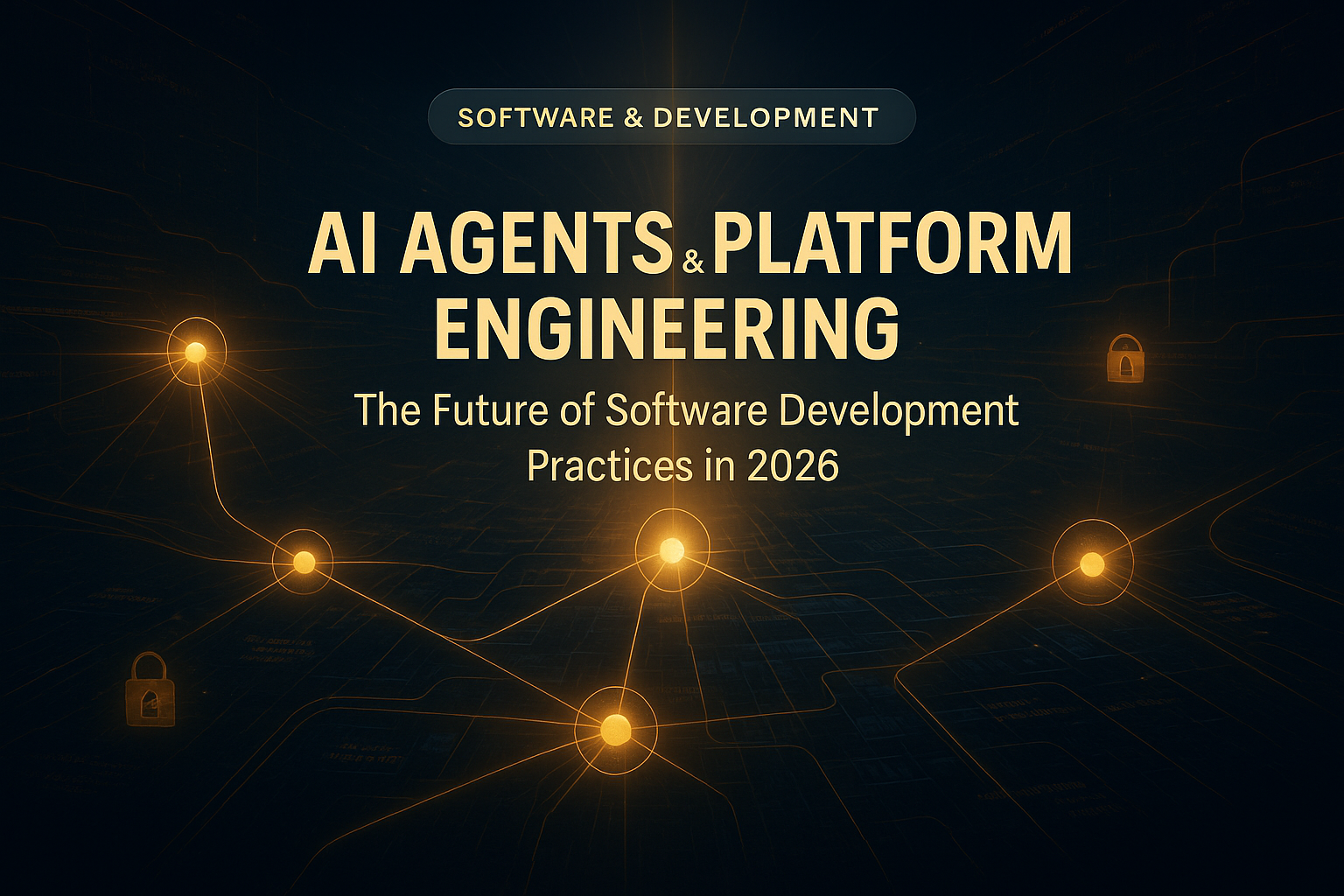
The Evolution of Software Development in 2026
The software development landscape is undergoing a fundamental transformation. As we move deeper into 2026, teams are no longer simply adopting new tools—they’re fundamentally reimagining how they build, deploy, and secure applications. AI agents, platform engineering, and supply chain security have emerged as the three pillars reshaping how organizations approach software development at scale.
AI Agents: The New Development Frontier
Artificial intelligence is no longer a supporting player in software development—it’s becoming the primary actor. AI agents powered by large language models (LLMs) are enhancing traditional platform capabilities in ways that were unimaginable just two years ago. These intelligent systems can generate infrastructure-as-code from natural language descriptions, automate routine development tasks, and assist developers in making better architectural decisions.
The shift is profound: instead of developers spending hours writing boilerplate code or configuring infrastructure, AI agents handle these repetitive, predictable tasks while developers focus on creative problem-solving and business logic. This doesn’t eliminate the need for skilled engineers—it elevates their role. Developers are becoming architects and strategists rather than code factories.
What makes this particularly powerful is the integration of semantic layers into AI workflows. Rather than treating data as isolated dashboards, semantic layers are becoming the backbone that allows AI agents to reason about data using shared, consistent definitions. This creates a common language between AI systems and human teams, enabling more intelligent automation and better decision-making across the entire development pipeline.
Platform Engineering: Taming Complexity at Scale
The explosion of cloud-native tools, Kubernetes orchestration, and microservices architectures has created significant challenges. Kubernetes complexity, tooling proliferation, and developer experience have become critical pain points that platform engineering teams must address. In 2026, the focus has shifted from simply managing infrastructure to creating seamless, intuitive platforms that developers actually want to use.
Platform engineering in 2026 is about abstraction and simplification. Internal developer platforms (IDPs) are maturing, providing self-service capabilities that reduce friction and accelerate time-to-market. Rather than asking developers to master dozens of tools and technologies, organizations are building curated, opinionated platforms that handle the complexity behind the scenes.
This approach directly addresses the developer experience (DevEx) challenge. When developers can deploy applications, manage configurations, and monitor systems through intuitive interfaces—often powered by AI assistance—productivity increases dramatically. The result is faster feature delivery, fewer deployment errors, and improved team morale.
Supply Chain Security: A Federal Imperative
While AI and platform engineering grab headlines, software supply chain security has quietly become mission-critical. Threats have evolved from simple dependency vulnerabilities to sophisticated attacks targeting build pipelines, artifact repositories, and code signing processes. The stakes are higher than ever.
Regulatory pressure is mounting. Supply chain security is now a federal imperative, with government agencies and enterprises demanding continuous visibility and control over every component in the software supply chain. Organizations must understand where their code comes from, what dependencies they’re using, and whether those components have been compromised.
This means implementing robust practices across the entire development lifecycle: secure code reviews, automated vulnerability scanning, signed artifacts, and comprehensive audit trails. It’s not optional—it’s becoming table stakes for any organization building software at scale.
The Convergence: AI, Platforms, and Security
The most forward-thinking organizations are recognizing that these three trends are interconnected. AI agents can automate security scanning and compliance checks within platform engineering workflows. Semantic layers provide the data foundation for security teams to understand and respond to threats. Platform engineering creates the guardrails that make secure practices the path of least resistance.
When combined effectively, these practices create a development environment that is simultaneously faster, more reliable, and more secure. Teams can move quickly without sacrificing safety because the platform itself enforces best practices.
Looking Ahead: The 2026 Development Stack
As we progress through 2026, expect to see continued investment in AI-powered development tools, more sophisticated internal developer platforms, and increasingly stringent supply chain security requirements. Organizations that successfully integrate these three areas will gain significant competitive advantages in speed, quality, and resilience.
The question for development leaders is no longer “Should we adopt AI agents and platform engineering?” but rather “How do we implement these practices responsibly while maintaining security and compliance?” The organizations that answer this question effectively will define the next era of software development excellence.
📖 Recommended Sources:
• SerpAPI Research – Current software development trends and practices in 2026
• Gartner Platform Engineering Reports – Industry analysis on platform maturity and DevEx
• CISA Software Supply Chain Security Guidance – Federal requirements and best practices
ⓘ This content is AI-generated based on research through March 30, 2026. Please verify specific claims and regulatory requirements independently.