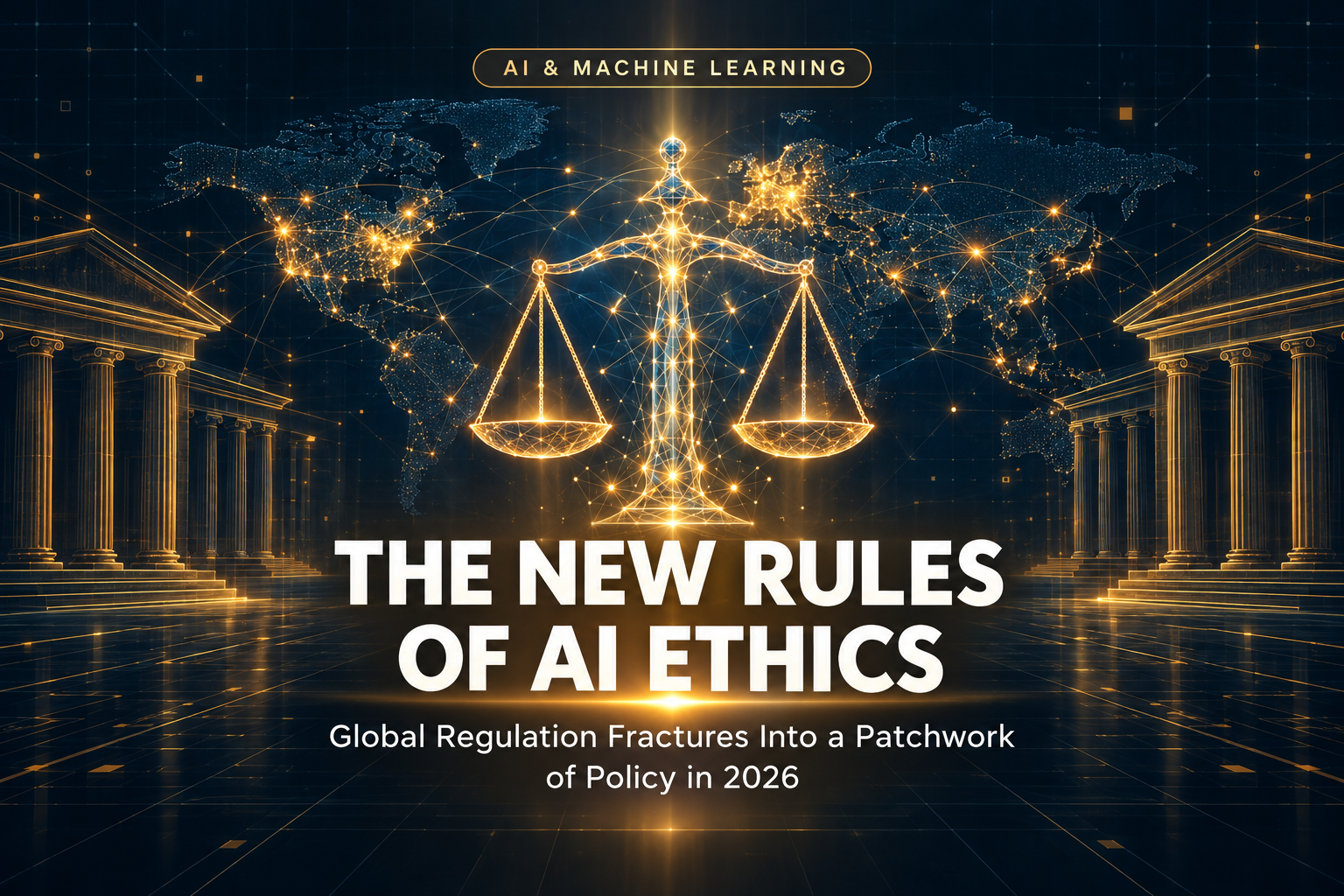
The world just got a masterclass in regulatory divergence: while Brussels pumps the brakes on its toughest AI rules, California and Colorado are racing ahead with binding obligations of their own. Welcome to the fractured reality of AI governance in late 2026.
As generative AI, autonomous agents, and frontier models continue reshaping industries, governments are no longer debating whether to regulate artificial intelligence — they’re wrestling with how, when, and whose rules apply. For business leaders, compliance teams, and technologists, understanding this shifting landscape isn’t optional anymore. It’s a core operational requirement.
The EU’s High-Stakes Delay
The EU AI Act, long considered the world’s most comprehensive AI law, hit a significant inflection point this year. According to legal analysis from Mofo and SC World, the EU’s Digital Omnibus, which entered into force in July 2026, pushed back enforcement of high-risk AI obligations rather than eliminating them. Standalone high-risk systems — those used in employment screening, credit decisions, healthcare access, and public services — now face their main compliance deadline of December 2, 2027, with AI embedded in regulated products delayed further to August 2, 2028.
Importantly, this isn’t deregulation. Transparency obligations remain active: as of August 2, 2026, people must generally be informed when interacting with AI systems, and synthetic content requires machine-readable marking, with a transition deadline of December 2, 2026 for pre-existing systems. The AI Office is also actively developing requirements for independent evaluators of systemic-risk models.
Critics argue the postponement weakens accountability exactly where AI decisions most affect people’s lives. Supporters counter that implementation infrastructure — standards, conformity assessments, regulatory guidance — simply wasn’t ready. Either way, the delay has intensified debate over whether commercial lobbying shaped the EU’s regulatory calendar.
America’s State-by-State Patchwork
With no comprehensive federal AI statute on the horizon, the United States is governing AI through a fragmented mix of state laws and voluntary industry commitments. California’s SB 53, the Transparency in Frontier Artificial Intelligence Act, has been in effect since January 1, 2026, requiring frontier-model developers to maintain safety frameworks, publish transparency reports, and disclose serious incidents.
California has layered on additional protections too, including companion-chatbot safeguards with crisis protocols, parental controls, and child-safety audits for AI systems used by minors. Meanwhile, Colorado repealed its original AI Act in May 2026 amid litigation pressure, replacing it with the narrower SB 26-189, effective January 2027, which retains developer documentation and adverse-outcome notice requirements while dropping the broader duty-of-care framework.
This regulatory desynchronization creates real operational challenges. Companies serving both EU and US markets can’t simply wait out the EU delay — they must simultaneously track California’s active frontier-AI disclosure rules, Colorado’s incoming automated-decision requirements, and the EU’s existing transparency mandates, all operating on different timelines.
Voluntary Commitments Under Scrutiny
A September 2026 White House accord reportedly secured commitments from leading AI labs — thought to include OpenAI and Anthropic — to establish internal assurance teams, pursue independent external evaluation, and implement board-level AI oversight. These voluntary frameworks matter, but their credibility hinges on scope and verification.
According to industry analysis, the central question isn’t whether companies claim to have safety commitments — it’s whether those commitments cover every model, training run, deployment context, and agentic system, and whether public reporting allows for genuine independent verification. Concerns have surfaced in 2026 that some company disclosures may not fully capture frontier reinforcement-learning runs or every safety layer in production.
This tension — between self-regulation and enforceable law — sits at the heart of the global AI ethics debate. Voluntary pledges can move faster than legislation, but without binding accountability mechanisms, they risk becoming public relations exercises rather than genuine safeguards.
The Push for Global Interoperability
Rather than a single global AI rulebook, 2026 has revealed an emerging consensus around shared technical standards instead of unified law. According to Eurasia Review, the most promising area of international convergence involves common evaluation methods: model testing protocols, documentation standards, incident reporting, and provenance tracking for frontier systems.
The United Nations continues building institutional scaffolding for global AI dialogue, including preparations for a new governance process. Meanwhile, the EU and US are increasingly competing for global regulatory influence — Brussels exporting its compliance-first model through market access requirements, while Washington leans on technology supply chains, export controls, and procurement policy to shape AI adoption worldwide.
For multinational organizations, this suggests the most durable long-term strategy isn’t betting on any single jurisdiction’s framework, but building interoperable compliance infrastructure — testing, auditing, and documentation practices robust enough to satisfy multiple regulatory regimes simultaneously. This approach connects closely to broader conversations around responsible AI deployment, algorithmic accountability, and enterprise risk management frameworks.
What Comes Next
Looking ahead, 2027 and 2028 will likely mark the real test of global AI governance, as the EU’s delayed high-risk obligations finally take effect alongside maturing US state frameworks. Expect continued friction between innovation-focused deregulation efforts and accountability-focused consumer protection laws, particularly as agentic AI systems and frontier models grow more autonomous and consequential. Organizations that treat this period as a compliance pause rather than a preparation window will likely find themselves scrambling when enforcement deadlines finally arrive.
The AI ethics regulation landscape of 2026 proves one thing clearly: there is no single rulebook, and there won’t be one anytime soon. Success will belong to organizations that build flexible, interoperable governance systems now, rather than waiting for regulatory certainty that may never fully arrive. As AI capabilities accelerate faster than legislation can keep pace, the question isn’t whether your organization is compliant today — it’s whether your compliance framework can adapt to tomorrow’s rules. What’s your organization doing to prepare for the next wave of AI regulation?
📖 Recommended Sources:
• Mofo (Morrison Foerster) – Legal analysis of the EU Digital Omnibus and AI Act compliance timeline changes
• SC World – Breakdown of EU AI Act enforcement status and organizational compliance requirements
• Eurasia Review – Analysis of global AI governance fragmentation and the push for common testing standards
• Kennedy’s Law – Examination of the EU-US sovereignty contest in AI regulation
ⓘ This content is AI-generated based on training data through January 2026 and supplemented with live research. Please verify specific claims independently.